

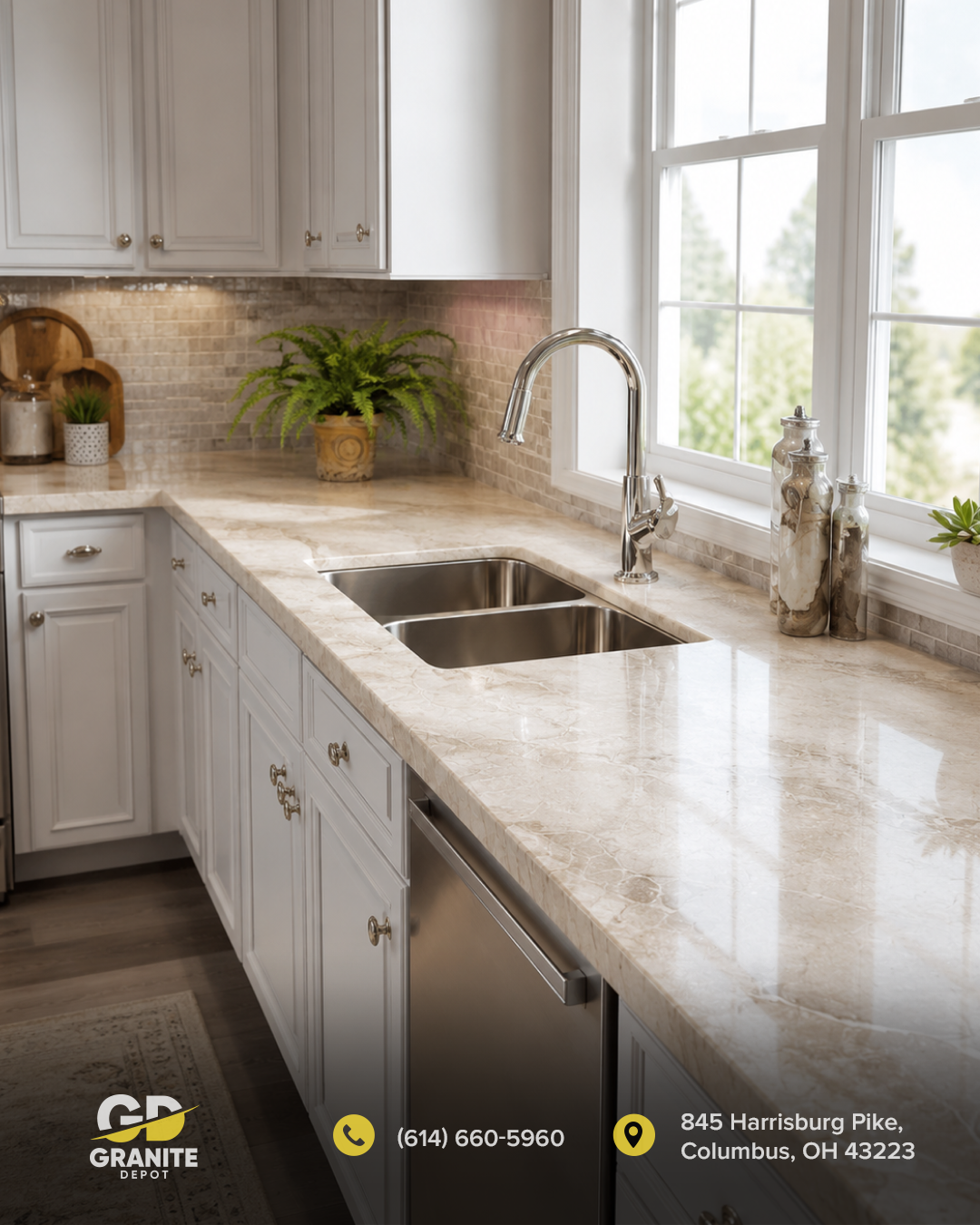
Quartzite is a hard natural stone, but it still needs the right care. In our experience, the safest routine is simple: wipe spills quickly, clean with a pH-neutral stone cleaner or mild soap and water, avoid harsh acids and abrasives, and reseal the surface when the stone begins absorbing moisture instead of repelling it.
At granite Depot of Columbus, we regularly explain that quartzite and quartz are not the same material. Homeowners comparing quartz countertops Lancaster, Ohio often assume the care is identical, but quartzite is natural stone and may need sealing, while engineered quartz does not.
What is the safest way to clean quartzite every day?
We recommend warm water, a soft microfiber cloth, and a small amount of mild dish soap or a cleaner labeled safe for natural stone. This is enough for most daily grease, crumbs, fingerprints, and food residue.
We avoid vinegar, lemon-based cleaners, abrasive powders, and aggressive scrubbing pads. Quartzite is hard, but the finish and sealer can still be dulled or damaged by the wrong products.
For everyday cleanup, our routine is straightforward:
- Wipe spills as soon as practical.
- Use a soft cloth or non-scratch sponge.
- Clean with mild soap and water or a pH-neutral stone cleaner.
- Dry the surface to reduce streaks and mineral spots.
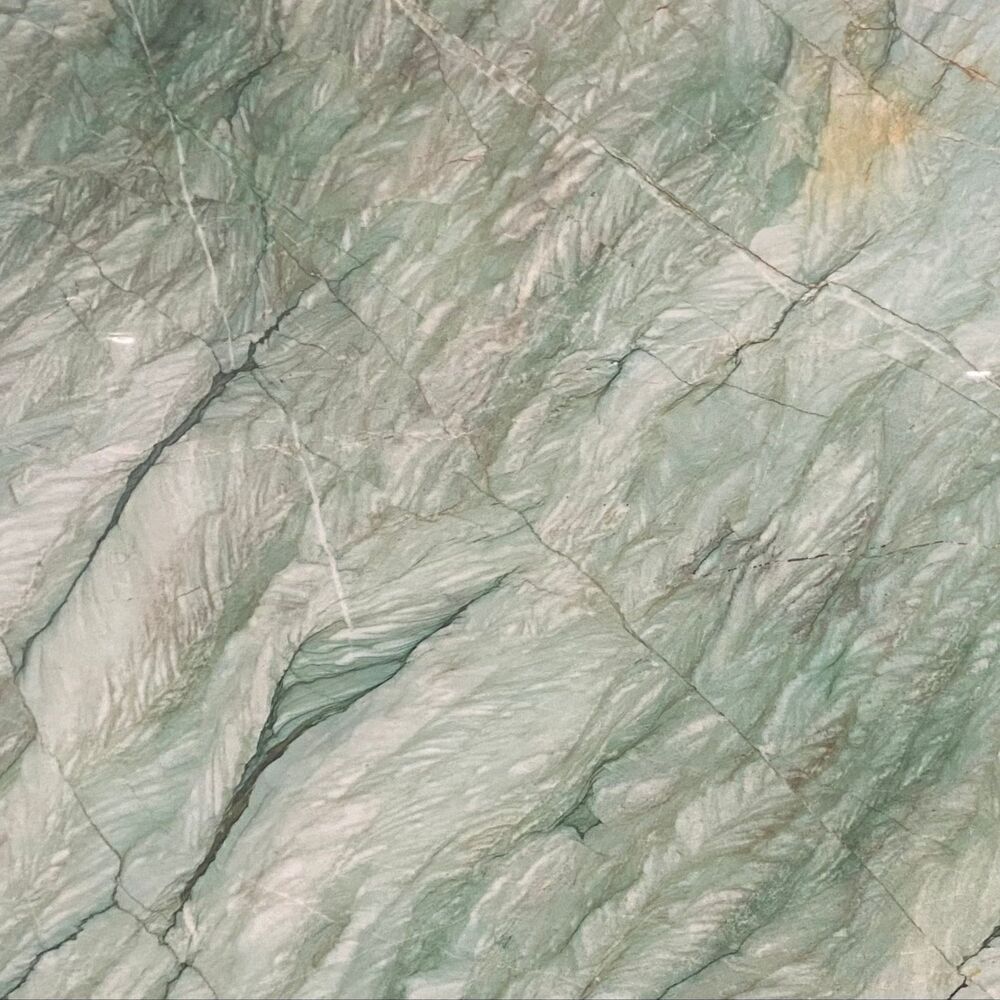
Do quartzite countertops need to be sealed?
Usually, yes. Most quartzite countertops benefit from a penetrating sealer because natural stone can absorb liquids through microscopic pores.
We do not recommend following a calendar blindly. A better approach is to watch how the surface behaves. If a small amount of water darkens the stone instead of beading on top, it may be time to reseal.
Some kitchens may need sealing roughly once a year, while others can go longer depending on the stone, finish, sealer, and amount of use. We prefer testing the actual surface rather than promising one fixed interval for every slab.
How can we tell if quartzite needs resealing?
We can perform a simple water-drop test in an inconspicuous area. If water remains on the surface for several minutes without darkening the stone, the sealer is still doing its job.
If the stone darkens quickly, absorbs water, or shows a temporary wet mark, the protective barrier may be weakening. That does not automatically mean the countertop is damaged; it means the stone may be ready for another application of penetrating sealer.
When clients compare quartz countertops Lancaster, Ohio with quartzite, this is one of the biggest maintenance differences we explain. Quartz has a nonporous resin-bound surface, while quartzite is a natural stone that can require periodic sealing.
What cleaners can damage quartzite?
Acidic and highly alkaline cleaners can damage the sealer or finish, so we avoid them. Common products to keep away from quartzite include vinegar, lemon cleaners, oven cleaner, strong bleach solutions, and abrasive scouring powders.
Repeated use of harsh cleaners can shorten the life of the sealer. We also avoid steel wool and rough pads.
How should we handle spills and stains?
We blot spills instead of spreading them across the surface. Water, coffee, wine, oil, and sauces should be removed promptly, especially on lighter stones.
If a stain remains after basic cleaning, we do not recommend experimenting with random household chemicals. A stone-safe poultice may help with certain oil or organic stains, but the correct treatment depends on what caused the mark.
Can quartzite handle heat?
Quartzite has high heat resistance, but we still recommend trivets for very hot cookware. Sudden temperature changes and prolonged contact with extreme heat can stress the stone, affect resin-filled areas, or damage nearby sealers and adhesives.
This is one reason some homeowners choose quartzite over engineered quartz for busy cooking areas. When we discuss quartz countertops Lancaster, Ohio, we explain that quartz is easier to maintain but generally has lower heat tolerance because it contains resin.
| Material | Heat resistance | Stain resistance | Sealing | Everyday maintenance |
|---|---|---|---|---|
| Granite | High | Good when sealed | Usually yes | Easy |
| Quartz | Moderate | High | No | Very easy |
| Marble | Moderate | Moderate; can etch | Yes | More careful |
| Quartzite | High | Good when sealed | Usually yes | Easy with proper care |
Can quartzite scratch?
Quartzite is highly scratch resistant, but we still recommend using cutting boards. Hardness does not make the surface indestructible.
A knife can become dull against stone, and repeated direct cutting can affect the finish over time. Cutting boards also protect against food acids, oils, and impact from heavy utensils.
Does quartzite etch like marble?
True quartzite is generally more resistant to acid etching than marble, but we still avoid prolonged exposure to acidic foods and cleaners. Some stones sold under quartzite trade names can contain calcite or have mixed mineral composition, so performance can vary.
At granite Depot of Columbus, we help clients compare the material in person before fabrication, especially when maintenance expectations are important.

What is the difference between quartzite and quartz?
Quartzite is natural stone; quartz is an engineered surface made from mineral particles and resin. Their appearance can overlap, but their care requirements are different.
Quartz usually needs no sealing and offers strong stain resistance. Quartzite handles heat better and gives the natural variation many homeowners want, but periodic sealing may be necessary.
| Material | Starting price | Natural or engineered | Sealing needed? | Best fit |
|---|---|---|---|---|
| Granite | $45 | Natural | Usually yes | Heat resistance and natural movement |
| Quartz | $55 | Engineered | No | Low-maintenance kitchens |
| Marble | $59 | Natural | Yes | Soft veining and classic appearance |
| Quartzite | $75 | Natural | Usually yes | Heat resistance and premium natural movement |
These are starting prices, not final installed totals. Final cost depends on slab selection, square footage, edge profile, sink and cooktop cutouts, seam planning, fabrication complexity, and installation conditions.
Does the cabinet base matter for quartzite care and longevity?
Yes. A durable surface still needs a stable base. Before installation, we check that cabinets are level, secure, and properly supported.
Birch and plywood cabinet components can provide a solid base when they are correctly built and installed. We pay special attention to long unsupported spans, sink bases, islands, and overhangs because movement below the stone can create stress above it.
For quartz countertops Lancaster, Ohio and for natural stone projects, proper support matters before the first day of use. Countertop performance starts with accurate templating and a stable cabinet system.
How long does quartzite installation take?
For a straightforward project, we typically plan about 7–10 business days from final template to installation once the material is available and the cabinets are ready. Complex edge profiles, full-height backsplash, special-order slabs, or unusual seam work can extend that timeline.
Our process usually includes:
- Final material and slab selection.
- Measurement and templating.
- Fabrication, including edge work and cutouts.
- Delivery and installation.
- Final fit and seam review.
At granite Depot of Columbus, we handle templating, fabrication, sink and cooktop cutouts, delivery, and installation so the stone is prepared for the actual kitchen rather than treated as a generic slab.
What habits help quartzite stay looking good longer?
We focus on a few simple habits rather than complicated maintenance routines. The easiest way to protect quartzite is to prevent stains, heat stress, and sealer breakdown before they become visible problems.
We recommend:
- Using trivets under very hot cookware.
- Using cutting boards instead of cutting directly on the stone.
- Wiping oil, wine, coffee, and acidic foods promptly.
- Avoiding vinegar, lemon cleaner, and abrasive powders.
- Testing water absorption periodically to judge when resealing is needed.
Is quartzite a good choice for a high-use kitchen?
Yes, when homeowners want natural stone with strong heat and scratch resistance and are comfortable with occasional sealing. Quartzite works well in kitchens where cooking happens every day and where natural movement in the slab is part of the design.
Homeowners researching quartz countertops Lancaster, Ohio may prefer quartz for lower maintenance, while others choose quartzite because they want the look and performance of natural stone.
FAQ
Can we use dish soap on quartzite?
Yes. We can use a small amount of mild dish soap with warm water and a soft cloth for routine cleaning.
Can we use vinegar on quartzite?
We do not recommend it. Vinegar is acidic and can damage sealers or affect the finish on some stone surfaces.
How often should quartzite be sealed?
There is no single schedule for every slab. We recommend testing water absorption and resealing when the surface begins to absorb moisture more readily.
Can we put hot pans directly on quartzite?
Quartzite has high heat resistance, but we still recommend trivets to protect the stone, sealer, and surrounding installation materials from extreme temperature changes.
Is quartzite harder to maintain than quartz?
Usually, yes, because quartzite may need periodic sealing. Quartz does not require sealing and is generally easier to maintain.
Can quartzite stain?
Yes. Quartzite can stain if liquids penetrate the stone, especially when the sealer is weak or spills are left for long periods.
Do we serve Lancaster, Ohio?
Yes. We serve Columbus, OH, Lancaster, Ohio, and surrounding communities, including projects for quartz countertops Lancaster, Ohio and natural stone countertops.
Where can we help with quartzite countertops?
At granite Depot of Columbus, we help homeowners choose, template, fabricate, and install quartzite, granite, quartz, and marble countertops. We are located at 845 Harrisburg Pike, Columbus, OH, and we serve Columbus, Lancaster, Ohio, and nearby communities.
Our team at granite Depot of Columbus can help compare maintenance, color, slab movement, edge profiles, and project details before fabrication begins. For current material availability or project planning, homeowners can call us at (614) 660-5960.