


Yes, in many kitchens we can replace the countertops and keep the existing cabinets. The key is making sure the cabinet boxes are structurally sound, level, securely fastened, and still worth building around.
At Granite Depot of Columbus, we see this often in homes where the cabinets are still in good condition but the counters are dated, stained, damaged, or simply no longer fit the homeowner’s style. For clients considering marble countertops Lancaster, Ohio, keeping the existing cabinetry can reduce disruption and let the new stone become the main visual upgrade.
When can we keep the existing cabinets?
We can usually keep the cabinets when they are solid, level, and firmly attached to the wall and floor. Cosmetic wear on doors or hardware is rarely a problem if the cabinet boxes themselves are stable.
We pay special attention to the base cabinets because stone is heavy. Granite, marble, and quartzite all need proper support, and quartz still requires a stable, level surface even though it is engineered.
Cabinets built with quality plywood or birch components can often remain in service for many years if they were installed correctly. Cabinets with water damage, swelling, loose joints, or sagging may need repair or replacement first.
What problems can prevent a countertop-only replacement?
The biggest problems are structural weakness, moisture damage, and poor leveling. A beautiful slab will not solve an unstable cabinet base.
We commonly pause a project when we find:
- cabinet boxes that move under pressure
- visible water damage under the sink
- tops that are noticeably out of level
- broken rails or unsupported spans
- major layout changes planned for appliances or the sink
If those issues are minor, reinforcement may be enough. If the boxes are badly damaged, replacing the cabinets before the stone usually makes more sense.
Can we change from laminate to stone without replacing cabinets?
Usually, yes, as long as the cabinets can support the new surface. Moving from laminate to granite, quartz, marble, or quartzite is one of the most common countertop-only upgrades we see.
Stone is heavier than laminate, so we inspect the cabinet boxes, fastening, and spans before templating. If reinforcement is needed around an island, sink base, or dishwasher opening, we address that first.
For marble countertops Lancaster, Ohio, we also look at sink type and cutout placement because marble requires careful fabrication around openings and corners.
Which countertop materials work best over existing cabinets?
Granite, quartz, marble, and quartzite can all work well over existing cabinetry if the base is strong enough. The best choice depends on maintenance, heat resistance, stain resistance, and appearance.
| Material | Starting price | Heat resistance | Stain resistance | Maintenance |
|---|---|---|---|---|
| Granite | $45 | High | Good when sealed | Periodic sealing |
| Quartz | $55 | Moderate | High | No sealing |
| Marble | $59 | Moderate | Moderate; can etch | Sealing and careful acid exposure |
| Quartzite | $75 | High | Good when sealed | Periodic sealing |
These are our current starting prices. Final project cost depends on slab selection, square footage, edge profile, sink and cooktop cutouts, seam placement, fabrication complexity, and installation conditions.
Is marble a good choice when the cabinets stay?
Yes, marble can work beautifully with existing cabinets when the color and style of the cabinetry support it. White, cream, gray, navy, and natural wood cabinets can all pair well with marble, depending on the slab.
When we help clients compare marble countertops Lancaster, Ohio, we look closely at undertones. A warm white marble can soften wood cabinetry, while cooler gray veining may work better with white or painted cabinets.
We also explain that marble can etch from acidic foods such as lemon juice, vinegar, and tomato. It is a natural material that can develop patina over time, so the homeowner should be comfortable with that character before choosing it.
Can we keep the backsplash, sink, and faucet?
Sometimes. If the backsplash meets the old countertop cleanly and survives removal, we may be able to preserve it.
We also confirm that the sink size, mounting style, faucet holes, and condition work with the new countertop. An undermount sink requires a precise fabricated cutout, so those details must be finalized before fabrication.
If the new stone thickness changes where the countertop meets the wall, a new backsplash or small transition detail may be needed.
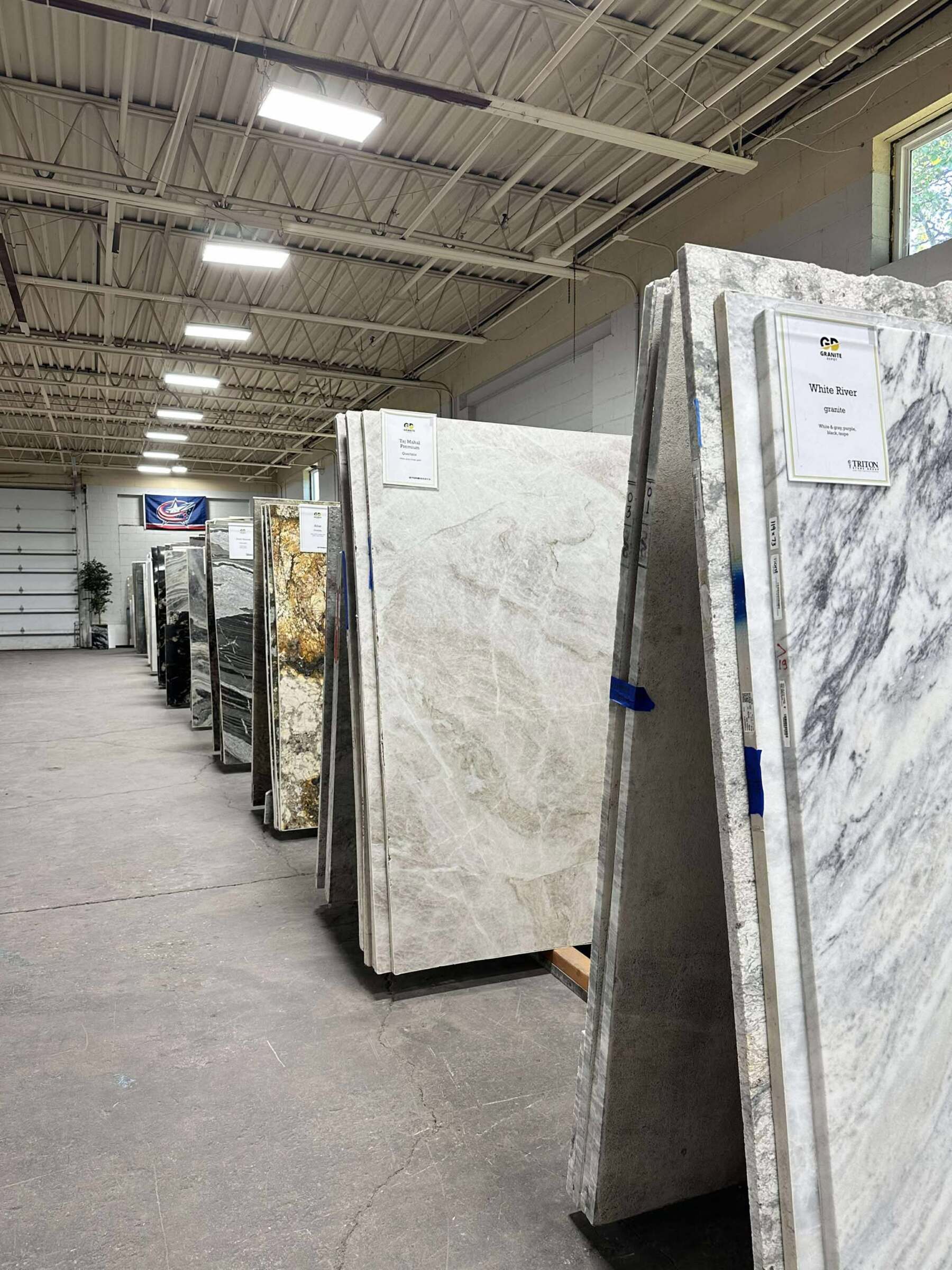
How does templating work when cabinets are staying?
We template once the cabinet layout is final, secure, and level. Templating captures wall conditions, cabinet dimensions, sink location, appliance clearances, overhangs, and seam planning.
This is the stage where accuracy matters most because fabrication is based on the final measurements. For marble countertops Lancaster, Ohio, we also discuss how veining should flow across long runs, corners, and islands before fabrication begins.
How long does the countertop replacement take?
For a straightforward project, we typically plan about 7–10 business days from final template to installation once the material is available and the cabinets are ready. The timeline can change if the slab is special order, fabrication is complex, or reinforcement is needed.
A standard in-home installation can often be completed in a day, while larger projects, full-height backsplash, or complicated seam work may take longer.
At granite Depot of Columbus, we coordinate templating, fabrication, delivery, and installation so the replacement moves in the correct order.
What does the replacement process usually include?
We keep the process simple:
- We inspect the existing cabinets and project layout.
- We confirm material, edge, sink, and backsplash details.
- We remove the old countertop when required.
- We reinforce or level cabinets if needed.
- We template the final layout.
- We fabricate the countertop, cutouts, edges, and seams.
- We deliver and install the finished pieces.
This sequence helps us avoid fabricating stone before the cabinet base is truly ready.
Is keeping old cabinets always the cheaper option?
Not always. Keeping cabinets usually avoids the cost and disruption of a full cabinet replacement, but badly damaged cabinets can create expensive problems later.
If the boxes are already failing, putting new stone on top can mean paying for removal and reinstallation again when the cabinets eventually need replacement. At granite Depot of Columbus, we would rather identify that problem before fabrication.
For many homeowners in Lancaster, Ohio, the best value is keeping well-built cabinets and updating the surfaces around them. That can create a major visual change without turning the project into a full kitchen remodel.
Should we refinish the cabinets before or after new countertops?
We usually prefer to complete major cabinet painting or refinishing before final countertop installation, especially when sanding or spraying is involved. This reduces the risk of damaging the new surface.
Minor touch-ups and hardware changes can happen later. At granite Depot of Columbus, we often compare cabinet samples with stone so the final combination feels intentional rather than pieced together.
What should we check before deciding?
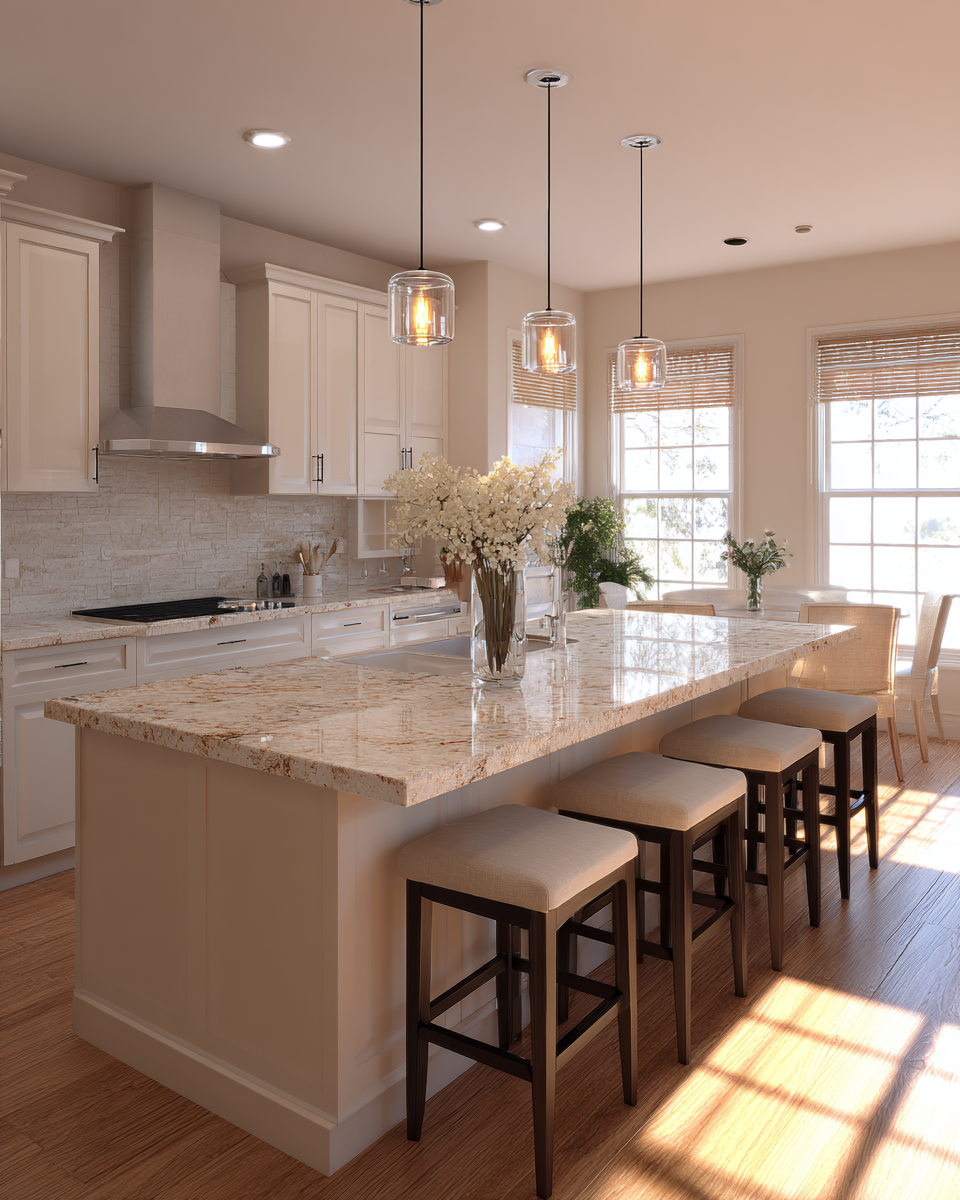
We recommend looking at cabinet condition, layout, and long-term plans before choosing the countertop. A countertop-only remodel makes the most sense when the cabinetry is still functional and the homeowner does not expect to change the footprint soon.
For clients comparing marble countertops Lancaster, Ohio, we usually ask three practical questions: Are the cabinets structurally sound? Is the current layout working? Will the chosen stone still make sense if the room gets small cosmetic updates later?
If all three answers are yes, keeping the cabinets can be a smart and efficient approach.
FAQ
Can we put granite on old cabinets?
Yes, if the cabinet boxes are level, secure, and strong enough to support the stone. We inspect the base before templating.
Can we install quartz over existing cabinets?
Yes. Quartz can be installed over existing cabinets when the boxes are structurally sound and properly supported.
Do marble countertops require special cabinet support?
Marble needs the same kind of stable, level cabinet base we expect for other stone surfaces. Large overhangs or unsupported spans may require reinforcement.
Can we replace countertops without damaging the cabinets?
Often, yes. We use careful demolition methods, but the condition and installation method of the old countertop affect how cleanly it can be removed.
Do we need new plywood under the countertop?
Not always. Some installations require additional support, while others do not. We decide based on cabinet construction, span, material, and project details.
How long are we without a working countertop?
The exact downtime varies, but final fabrication is typically about 7–10 business days after templating. We plan removal and installation timing to keep the unusable period as short as practical.
Do we serve Lancaster, Ohio?
Yes. We serve Columbus, OH, Lancaster, Ohio, and surrounding communities, including projects involving marble countertops Lancaster, Ohio.
Where can we help with a countertop-only remodel?
granite Depot of Columbus is located at 845 Harrisburg Pike, Columbus, OH. We serve Columbus, Lancaster, Ohio, and nearby communities with countertop selection, templating, fabrication, sink and cooktop cutouts, delivery, and installation.
Whether we are replacing laminate, granite, quartz, or an older stone surface, we first make sure the existing cabinet base is worth keeping. Homeowners can call us at (614) 660-5960 to discuss material availability, project details, and current pricing.