

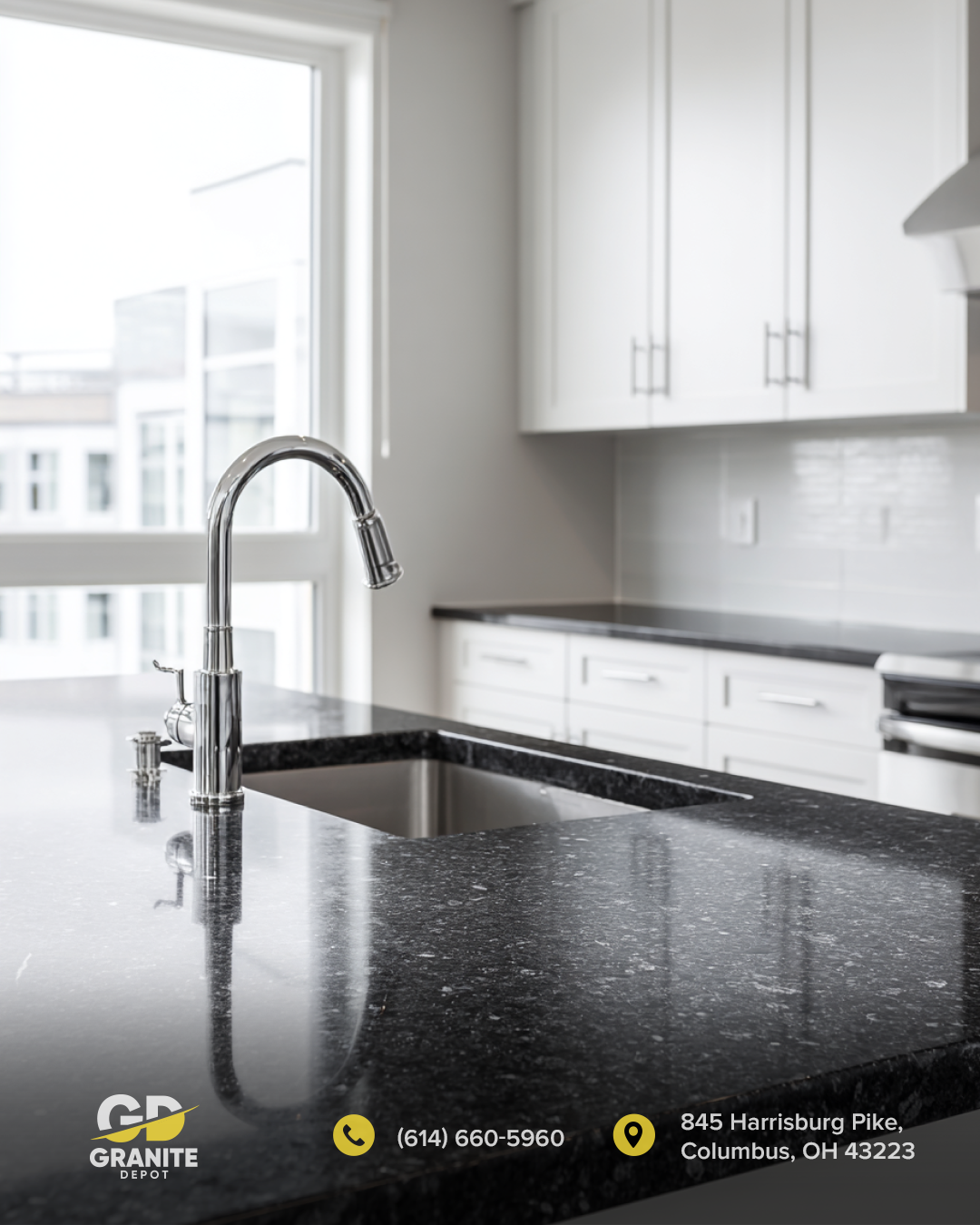
Can quartz countertops be damaged even though they are low-maintenance?
Yes, quartz countertops can be damaged even though they are one of the easiest surfaces to care for in a busy kitchen. Quartz is durable, stain-resistant, and practical, but it is not indestructible.
Many homeowners hear “low-maintenance” and assume quartz can handle anything: hot pans, harsh cleaners, direct sunlight, heavy impact, and aggressive scrubbing. That misunderstanding is where most damage starts. At granite Depot of Columbus, we often explain that quartz performs best when homeowners understand what it can handle and what should be avoided.
For homeowners comparing countertops Delaware, Ohio, quartz is still a strong choice. The key is knowing how to protect the surface before small habits turn into permanent marks.
What is quartz actually made of?
Quartz countertops are engineered surfaces made from crushed quartz minerals mixed with resins, pigments, and binders. This gives quartz a consistent appearance and strong daily performance, but the resin content also explains why heat and UV exposure can be a concern.
Natural stones like granite, marble, and quartzite come directly from the earth and are cut into slabs. Quartz is manufactured, which gives homeowners more color consistency and pattern control. That is one reason quartz is so popular in kitchens, bathrooms, laundry rooms, and vanity areas.
| Material | Natural or engineered? | Main strength | Main caution |
|---|---|---|---|
| Granite | Natural stone | Heat resistance and durability | Needs sealing |
| Quartz | Engineered surface | Stain resistance and consistency | Sensitive to high heat/UV |
| Marble | Natural stone | Soft, classic movement | Etching and staining |
| Quartzite | Natural stone | Strength and natural beauty | Needs proper sealing |
Quartz is practical, but it has limits. Understanding those limits helps the countertop last longer.
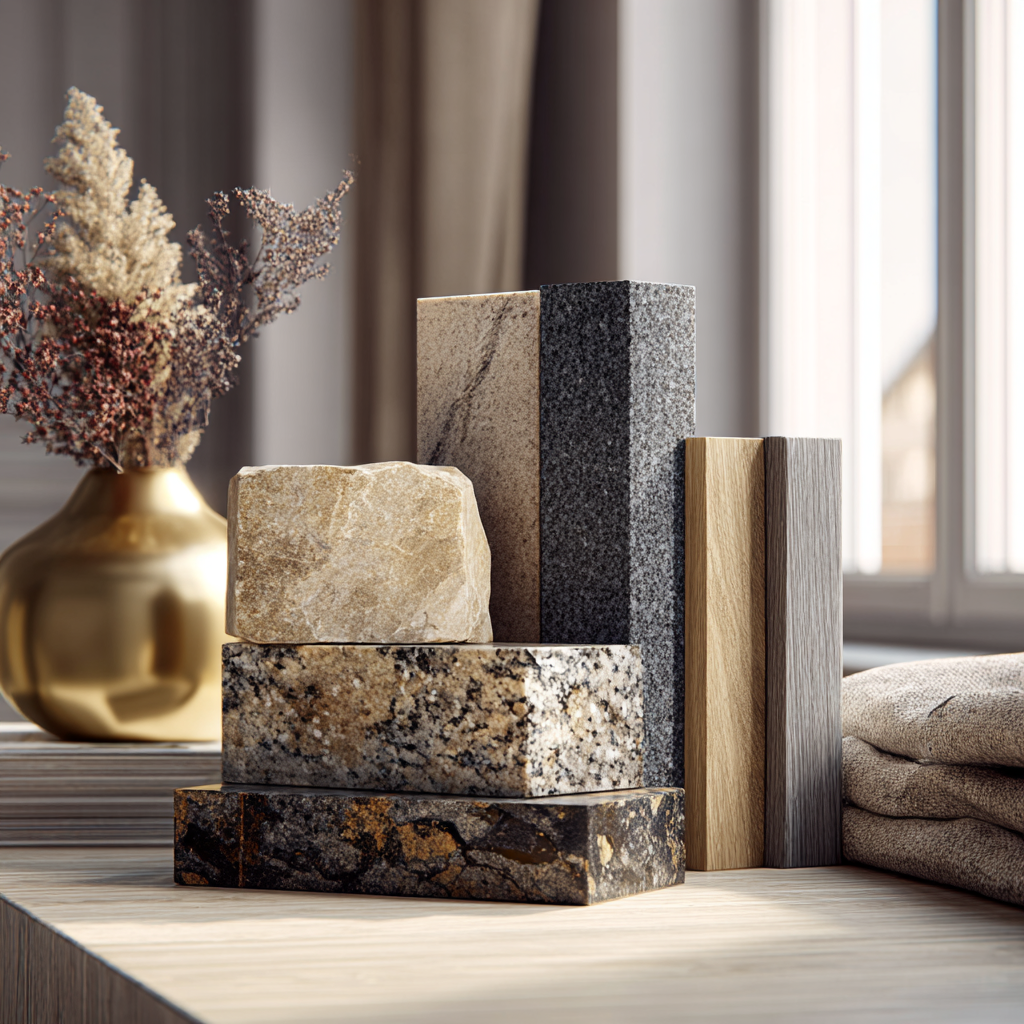
Can heat damage quartz countertops?
Yes, high heat can damage quartz countertops because the resin in the surface can discolor, scorch, or crack under extreme temperature changes. A hot pan directly from the stove or oven should never be placed on quartz without protection.
This surprises many homeowners because quartz feels hard and strong. The stone particles can handle a lot, but the resin can react differently than natural stone. A hot skillet, baking tray, slow cooker, air fryer, or electric griddle can leave a mark if it sits directly on the surface.
Use trivets, heat pads, or cutting boards under hot items. This simple habit can prevent damage that may not be repairable.
| Heat source | Risk level for quartz | Better habit |
|---|---|---|
| Hot pan | High | Use a trivet |
| Baking sheet | High | Place on heat pad |
| Slow cooker | Moderate to high | Use a protective board |
| Coffee maker | Low to moderate | Check heat buildup |
| Air fryer | Moderate to high | Leave airflow and protection |
| Direct sunlight | Long-term risk | Use shades where needed |
For countertops Delaware, Ohio, we always recommend thinking about how the kitchen is used daily. A surface near a stove, sunny window, or island cooking zone needs extra planning.
Can sunlight discolor quartz?
Yes, direct sunlight can discolor some quartz surfaces over time, especially in rooms with strong UV exposure. Quartz is usually better for indoor use than outdoor kitchens or uncovered patio areas.
Large windows, sliding doors, and sunrooms can expose one part of the countertop to more light than another. Over time, this may create uneven fading or color change. This is especially important with darker quartz, bright white quartz, or quartz installed near direct afternoon sun.
If a kitchen gets intense sunlight, window treatments can help. For outdoor kitchens, homeowners should usually consider granite or quartzite before quartz.
Can harsh cleaners ruin quartz?
Yes, harsh cleaners can dull, discolor, or weaken the surface of quartz. Products with bleach, oven cleaner, drain cleaner, paint remover, strong degreasers, or high-alkaline formulas should not be used on quartz countertops.
Most daily cleaning only needs mild dish soap, warm water, and a soft cloth. Quartz does not need aggressive scrubbing to look clean. In fact, overcleaning with the wrong product can cause more damage than normal cooking.
Avoid these products on quartz:
- Bleach-heavy cleaners.
- Oven cleaner.
- Drain cleaner.
- Paint remover.
- Abrasive powder cleaners.
- Metal scrub pads.
- Strong solvents.
- Harsh degreasers.
At granite Depot of Columbus, we tell clients that simple cleaning is usually the safest cleaning. Quartz does not need complicated maintenance, but it does need the right products.
Do sharp objects scratch quartz?
Quartz is scratch-resistant, but it is not scratch-proof. Knives, metal tools, ceramic items, and dragging heavy objects can leave surface marks or damage the finish.
Cutting directly on quartz is a bad habit. It can dull knives and may eventually leave visible marks, especially on darker or matte surfaces. A cutting board is always the better choice.
| Everyday object | Possible damage | Safer option |
|---|---|---|
| Knife | Scratches or metal marks | Cutting board |
| Ceramic dish | Surface marks | Lift instead of drag |
| Metal tray | Scuffs | Use felt pads or lift |
| Heavy appliance | Scratches when dragged | Pick up fully |
| Tools | Chips or marks | Keep off countertop |
Homeowners shopping for countertops Delaware, Ohio often ask if quartz can handle kids, cooking, and daily mess. Yes, it can. But basic protection still matters.
Can impacts chip quartz edges?
Yes, hard impacts can chip quartz edges, especially around sinks, corners, dishwasher areas, and island overhangs. The surface is strong, but edges are more vulnerable than the flat middle section.
A dropped cast iron pan, heavy mug, or metal tool can chip an exposed corner. This is more likely when the countertop has a sharper edge profile. Rounded or eased edges can sometimes be more forgiving in busy kitchens.
Edge style matters for real life. A family kitchen may benefit from a simpler, slightly softened edge instead of a sharp modern profile.
Can standing water damage quartz?
Standing water usually will not stain quartz quickly, but it can still cause problems around seams, caulk lines, sinks, and poorly maintained edges. The countertop surface itself is nonporous, but the areas around it still need care.
Water that sits around a sink can weaken caulk or collect grime. If water repeatedly gets into seams or cabinet areas, the issue may affect the structure below the countertop. This is where cabinet quality matters.
Base cabinets made with strong plywood, birch components, or properly supported cabinet boxes help the countertop stay stable. Weak or swollen cabinets can create uneven support, which may affect the long-term fit of the countertop.
How do quartz costs compare with other countertop materials?
Quartz is usually a mid-range to higher countertop option, depending on color, brand, slab size, edge details, and installation needs. It is often chosen because it offers a balance of appearance, durability, and easy cleaning.
Here are starting price points we discuss with homeowners:
| Material | Starting price per sq ft | Best practical use |
|---|---|---|
| Granite | $45 | Durable kitchens and natural stone character |
| Quartz | $55 | Low-maintenance indoor kitchens and bathrooms |
| Marble | $59 | Softer luxury look with more care |
| Quartzite | $75 | Strong natural stone with premium movement |
Final pricing depends on square footage, slab selection, fabrication, edge profile, sink cutout, cooktop cutout, removal, delivery, and installation. A simple vanity top costs less than a large kitchen with an island and multiple cutouts.
granite Depot of Columbus helps clients compare materials based on lifestyle, not only color. The right choice depends on how the surface will be used every day.
What mistakes during installation can affect quartz performance?
Poor measurements, weak support, bad seam placement, and uneven cabinets can affect how quartz performs after installation. Quartz is durable, but it still needs accurate fabrication and proper support.
A countertop should be templated after cabinets are installed, level, and secure. If the cabinets are not ready, the countertop may not fit correctly. Large islands, overhangs, sink areas, and appliance cutouts need careful planning.
A typical countertop project includes:
- Material selection.
- Layout review.
- Field measurements or template.
- Countertop fabrication.
- Sink and cooktop cutouts.
- Edge finishing.
- Delivery and installation.
- Final care guidance.
Most countertop projects take days to a few weeks after the final template, depending on material availability, fabrication schedule, and project complexity. For countertops Delaware, Ohio, good timing matters because rushed measurements can lead to expensive corrections.
Can matte or honed quartz be harder to maintain?
Yes, matte and honed quartz finishes can show fingerprints, smudges, oils, and water marks more easily than polished quartz. They can still be beautiful, but homeowners should understand the cleaning difference before choosing them.
A polished quartz surface reflects more light and is often easier to wipe clean visually. Matte quartz creates a softer look, but residue may be more noticeable under certain lighting. Dark matte quartz can be especially sensitive to fingerprints.
| Quartz finish | Look | Maintenance note |
|---|---|---|
| Polished | Glossy and reflective | Usually easiest to wipe clean |
| Matte | Soft and low-sheen | Can show smudges |
| Honed | Smooth and quiet | May show oils or marks |
| Textured | More tactile | Needs careful cleaning around texture |
A finish should match the household. A busy family kitchen may need a different finish than a lightly used showpiece kitchen.
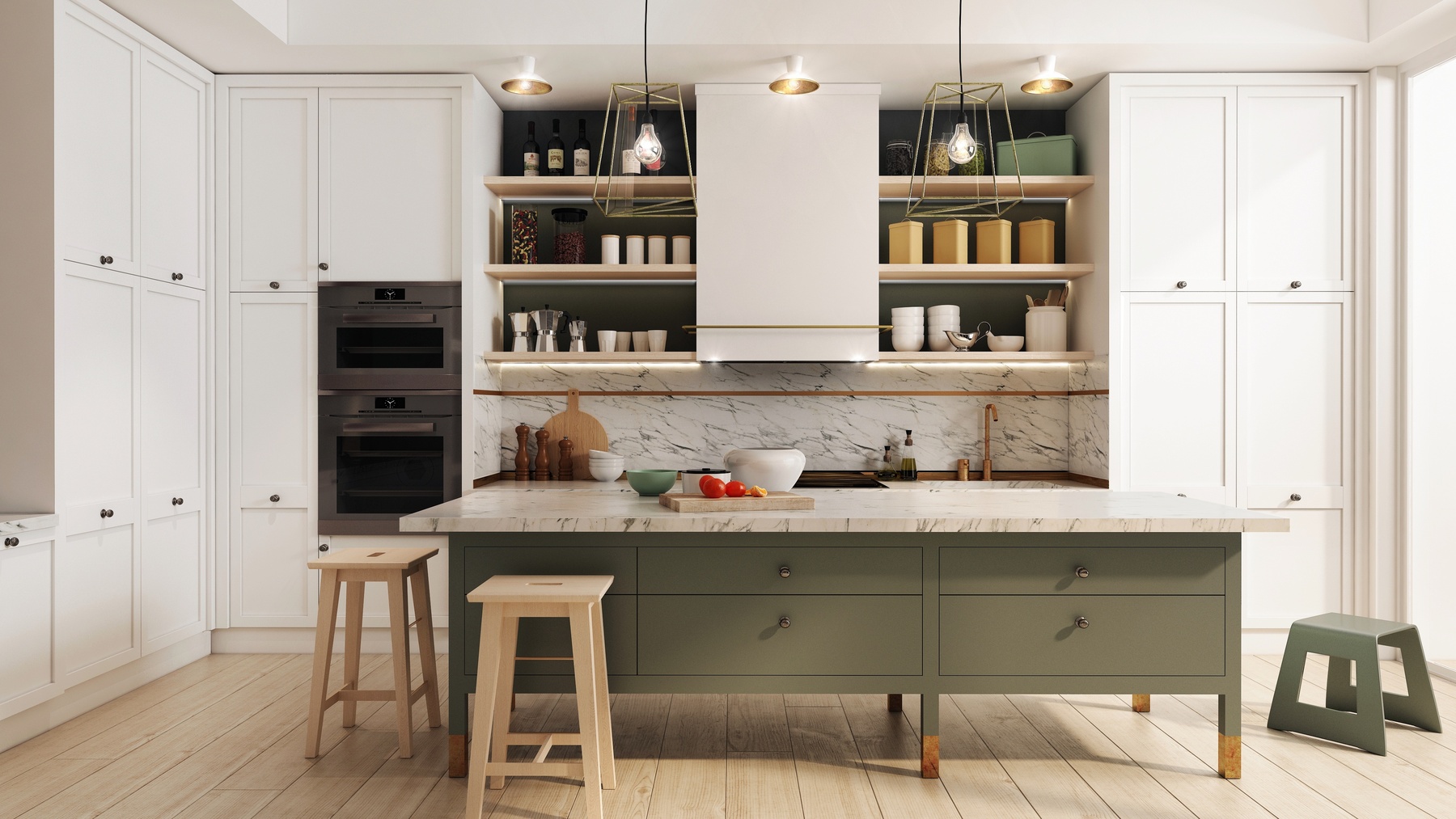
What daily habits protect quartz the most?
The best quartz care habits are simple: use trivets, use cutting boards, clean spills quickly, avoid harsh cleaners, and lift heavy objects instead of dragging them. These steps prevent most common damage.
Quartz is popular because it does not require sealing like granite, marble, or quartzite. That does not mean it can be treated carelessly. A few daily habits make a major difference.
Quick care rules:
- Use trivets under hot pans.
- Use cutting boards for food prep.
- Wipe spills with mild soap and water.
- Avoid bleach and abrasive cleaners.
- Lift appliances instead of sliding them.
- Protect edges from heavy impacts.
- Avoid direct long-term UV exposure.
- Keep seams and sink areas dry.
For homeowners choosing countertops Delaware, Ohio, the goal is not to make quartz feel delicate. The goal is to use it correctly so it stays beautiful longer.
When should homeowners choose granite, marble, or quartzite instead of quartz?
Homeowners should consider granite or quartzite instead of quartz when heat resistance, outdoor use, or natural stone character is the priority. Marble may be the right choice when the homeowner wants a softer, classic surface and accepts more maintenance.
Quartz is excellent indoors, especially for kitchens and bathrooms where stain resistance matters. Granite is better for homeowners who want strong natural stone and better heat resistance. Quartzite works well for those who want natural movement and durability. Marble is best for people who love the look and are comfortable with etching and patina.
No material is perfect for every household. That is why the selection process should include cooking habits, cleaning style, sunlight exposure, budget, and design preferences.
FAQ
Can quartz countertops stain?
Quartz is highly stain-resistant, but certain chemicals, dyes, and harsh cleaners can still discolor or damage the surface.
Can I put a hot pan on quartz?
No. Use a trivet or heat pad because high heat can damage the resin in quartz.
Does quartz need sealing?
No. Quartz does not need sealing because it is nonporous.
Can quartz be used outdoors?
Quartz is usually not recommended for uncovered outdoor use because UV exposure can cause discoloration over time.
What cleaner is safest for quartz?
Mild dish soap, warm water, and a soft cloth are usually safest for daily cleaning.
Can quartz chip?
Yes. Quartz can chip at edges or corners if hit with a heavy object.
Is quartz better than granite?
Quartz is easier to maintain, while granite offers better heat resistance and natural stone variation. The better choice depends on the home.
Who can help homeowners choose quartz countertops near Delaware, Ohio?
granite Depot of Columbus serves Columbus, OH and nearby areas, including Delaware, Ohio, with countertop selection, fabrication, installation, edge profiles, sink cutouts, and material guidance. We work with granite, quartz, marble, and quartzite for kitchens, bathrooms, islands, and vanity tops.
For help with countertops Delaware, Ohio, call (614) 660-5960, visit 845 Harrisburg Pike, Columbus, OH, or go to granitedepotcolumbus.com.