

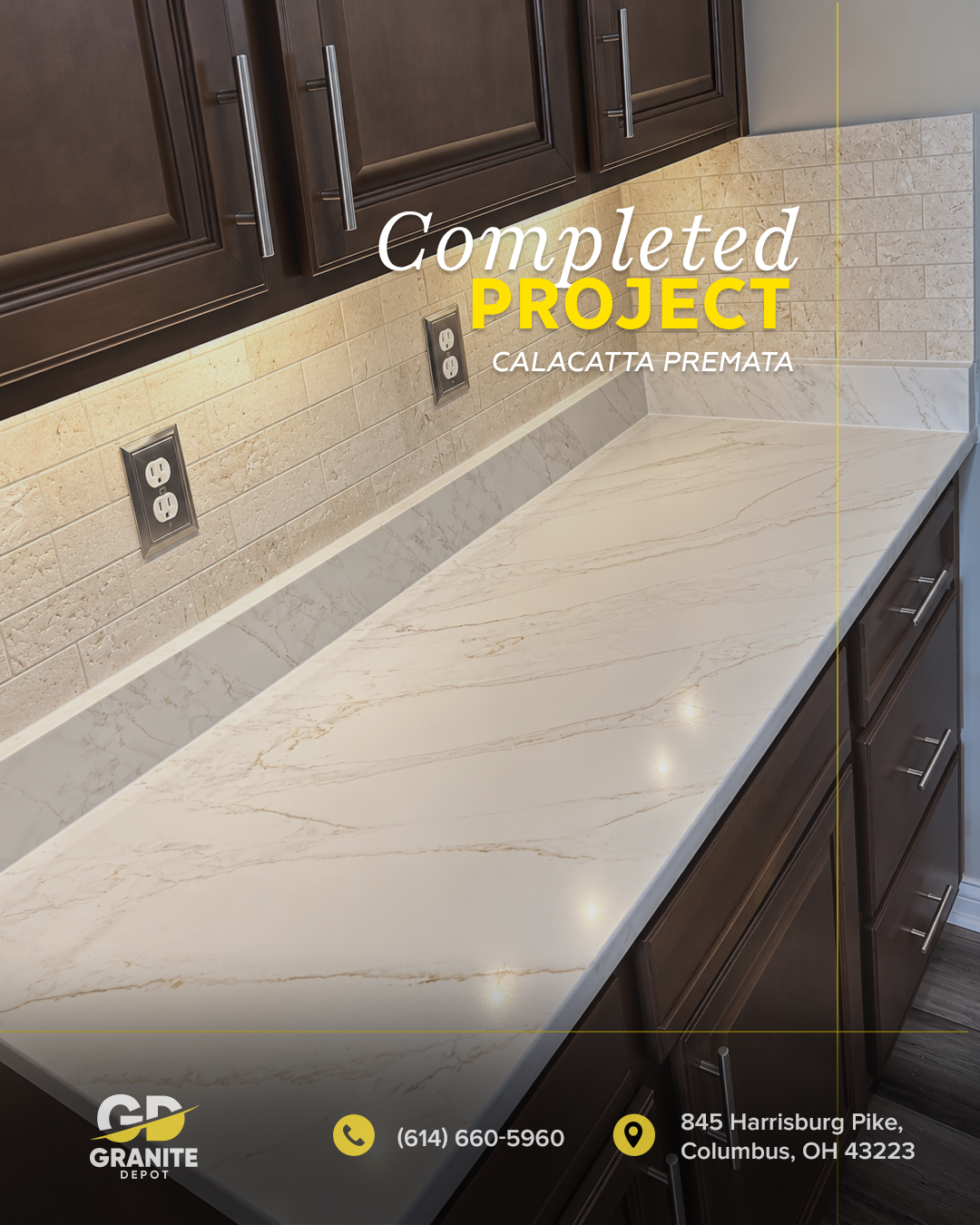
Choosing between quartz and quartzite depends on how you use your kitchen, how much maintenance you want to handle, and which look you prefer. Quartz is an engineered surface with consistent patterns and simple everyday care. Quartzite is natural stone, so every slab has its own veining and mineral variations, and it may need periodic sealing. At granite Depot of Columbus, we help homeowners compare these materials based on practical needs, not appearance alone.
What Is the Difference Between Quartz and Quartzite?
Quartz is an engineered countertop material made from quartz mineral, resin, pigments, and other components. The manufacturing process creates a controlled appearance, so colors and patterns are generally more consistent across a countertop.
Quartzite is a natural metamorphic rock formed when sandstone is exposed to heat and pressure over time. Its veining, color shifts, and mineral patterns develop naturally, which means the slab you select matters. Homeowners comparing quartz countertops in Mount Vernon, Ohio, with quartzite should first decide whether they prefer predictable patterns or the variation found in natural stone.
The names sound similar, but the materials are not interchangeable. Engineered quartz generally does not require sealing, while quartzite may benefit from an appropriate impregnating sealer depending on the stone’s porosity. We recommend confirming the exact material with your supplier because some stones are incorrectly labeled in the marketplace.

Which Material Is Better for Everyday Kitchen Use?
Quartz is often the practical choice for households that want a consistent appearance and a straightforward cleaning routine. It works well in busy kitchens where people prepare meals, make coffee, and clean up several times a day. A soft cloth, warm water, and a mild cleaner are generally enough for routine care.
Quartzite suits homeowners who want natural stone and distinctive veining. It is hard and resistant to many common kitchen acids, but its porosity varies by slab, and sealing may be needed to improve stain resistance. We still recommend wiping up spills promptly and using cutting boards, trivets, and coasters with either surface.
Imagine a household that bakes frequently and wants a bright white countertop with a consistent pattern across a long island. Quartz may make achieving that look easier. If the priority is a one-of-a-kind slab with sweeping gray or gold veins, quartzite may be the better fit.
How Do Quartz and Quartzite Compare in Durability?
Both materials can perform well in a kitchen when properly fabricated, installed, and maintained. The difference is how each material responds to heat, stains, scratches, and everyday use.
| Feature | Engineered Quartz | Natural Quartzite |
|---|---|---|
| Composition | Quartz mineral, resin, and pigments | Natural metamorphic rock |
| Pattern | Generally consistent | Unique from slab to slab |
| Routine care | Mild cleaner; no routine sealing | Stone-safe cleaner; sealing depends on porosity |
| Heat resistance | Use trivets; high heat can damage resin | Generally good heat resistance, but thermal shock can cause damage |
| Stain resistance | Low absorption; spills should still be cleaned | Varies by stone; sealing can improve stain resistance |
| Scratch resistance | Resistant, but not scratch-proof | Very hard, but edges can chip and knives can dull |
| Best suited for | Consistent style and easy maintenance | Natural variation and distinctive stone patterns |
Neither option is indestructible. Heavy cookware dropped on an edge can chip a countertop, and rapid temperature changes can damage either surface. We advise using cutting boards and trivets rather than treating any countertop as a surface that cannot be harmed.
Does Quartz or Quartzite Require More Maintenance?
Quartz usually requires less maintenance because engineered quartz surfaces do not need periodic sealing. For everyday cleaning, use a soft cloth with warm water and mild soap or a cleaner approved by the manufacturer. Avoid abrasive pads and harsh chemicals unless the product maker confirms they are safe for your specific surface.
Quartzite may require sealing, but there is no universal schedule for every slab. Dense varieties may need little or no sealer, while more porous stone may benefit from sealing at installation and reapplication according to the sealer manufacturer’s guidance.
If water darkens an area around the sink or begins absorbing rather than beading on the surface, ask a stone professional whether the countertop needs attention. The Natural Stone Institute’s guidance on quartzite care explains why sealing requirements depend on the particular stone.
For people researching quartz countertops in Mount Vernon, Ohio, maintenance is often a deciding factor. If you would rather skip sealing checks, engineered quartz may be more convenient. If natural veining is a priority and you are comfortable with basic stone care, quartzite can be worth the extra attention.
Which Material Handles Heat and Stains Better?
Quartzite generally tolerates heat better than engineered quartz, but we still recommend placing hot pots and pans on trivets. A sudden temperature change can damage natural stone, too, and the risk may be greater around edges or areas with existing weaknesses.
Engineered quartz contains resin, so direct contact with very hot cookware may cause discoloration or other damage. Follow the surface manufacturer’s instructions and use heat protection for pans, slow cookers, air fryers, and other appliances that remain hot for long periods. Caesarstone’s quartz care guidance also recommends protecting quartz surfaces from hot cookware.
For households comparing quartz countertops in Mount Vernon, Ohio, with quartzite, this distinction matters most when cooking habits are part of the decision. Both materials can work well, but neither should be treated as completely heat-proof.
For stains, engineered quartz is typically low-porosity and does not need sealing. Quartzite’s stain resistance depends on the specific stone and its porosity, so sealing may help reduce absorption. Neither material should be left with standing wine, oil, coffee, or other spills for extended periods.
How Much Do Quartz and Quartzite Countertops Cost?
Quartzite typically costs more than quartz in the reference pricing provided for this comparison. The final project price depends on the selected color, slab availability, countertop area, edge profile, cutouts, seams, backsplash, and installation complexity.
| Countertop Material | Reference Price per Square Foot |
|---|---|
| Granite | $45 |
| Quartz | $55 |
| Marble | $59 |
| Quartzite | $75 |
These figures are starting reference rates, not a guaranteed final installed quote for every kitchen. Ask what is included in the price because templating, fabrication, sink or cooktop cutouts, delivery, installation, and backsplash pieces may be itemized differently depending on the project.
Homeowners searching for quartz countertops in Mount Vernon, Ohio, should compare the full scope of work rather than just the material rate. For example, a kitchen with several corners, a waterfall island, or multiple seams may require more fabrication time than a simple, straight countertop run.
Natural quartzite can also cost more to fabricate because its hardness may increase tool wear and the time needed to shape it. At granite Depot of Columbus, we recommend reviewing the selected material and project details before making a final budget decision.
How Long Does Countertop Fabrication and Installation Take?
A straightforward countertop project often takes around one to three weeks from final material selection to installation, although material availability and shop scheduling can change the timeline. After the cabinets are installed and level, a professional takes precise measurements or creates a template. Fabrication commonly takes several business days to roughly two weeks after templating, depending on the slab, layout, and workload.
Installation itself often takes several hours to a full day for a typical kitchen. Larger kitchens, waterfall edges, unusual cutouts, or complex seam placement can require additional time. We confirm the schedule after reviewing the project details rather than promising the same turnaround for every order.
Countertops need stable, level support. If the remodel also includes cabinetry, the installer should confirm that cabinet boxes and supports – whether plywood, birch components, or another suitable construction – are properly installed before templating. Adjustments after fabrication can cause delays and may require additional work.

How Should You Choose a Slab for Your Kitchen?
The best way to choose is to view the actual slab and compare it with your cabinets, flooring, backsplash, and lighting. Photos can help narrow the options, but they cannot fully show the scale of a vein or the variation across a full slab.
At granite Depot of Columbus, we suggest bringing cabinet samples, flooring samples, or clear photos of the kitchen when visiting a showroom. Look at the slab from several angles and ask how the pattern will be positioned around the sink, cooktop, corners, and island. With quartzite, review the actual piece that will be fabricated whenever possible because natural movement can vary considerably.
Choose quartz if consistent patterning and low-maintenance care are high priorities. Choose quartzite if you want natural variation and are comfortable following stone-care recommendations. Neither is automatically the better choice; the right material is the one that suits your daily routine, design preferences, and budget.
Is Quartzite Worth the Higher Price?
Quartzite can be worth the additional cost when its natural pattern, stone character, and heat tolerance match your priorities. Its higher price may reflect the slab itself and the additional effort required to fabricate a very hard natural material. Still, the value depends on your budget and how much you care about having a unique natural surface.
Quartz can offer excellent value for homeowners who prefer a predictable look and simpler maintenance. If you are comparing quartz countertops in Mount Vernon, Ohio, with premium natural quartzite, consider how much of your budget should go toward the countertop versus cabinets, appliances, flooring, and lighting. A well-planned kitchen balances all of these elements.
Frequently Asked Questions
Is quartz better than quartzite for a busy kitchen?
Quartz is often easier to maintain because it does not need routine sealing. Quartzite is also a strong option, but its care requirements depend on the slab’s porosity and any applied sealer.
Is quartzite real stone?
Yes. Quartzite is a natural metamorphic rock formed from sandstone under heat and pressure. Engineered quartz is manufactured using quartz mineral, resin, pigments, and other components.
Can I put a hot pan on quartz?
No. Use a trivet or hot pad because high heat and sudden temperature changes can damage engineered quartz.
Does quartzite need to be sealed?
Sometimes. The need depends on the stone’s porosity. Ask your fabricator or stone supplier for guidance specific to the slab you select.
Which countertop costs less, quartz or quartzite?
Based on the reference rates in this article, quartz is $55 per square foot and quartzite is $75 per square foot. The final quote depends on the slab and project details.
How long does countertop installation take?
Installation often takes several hours to a day, while the full process from selection and templating to installation commonly takes one to three weeks. Complex projects or material delays can extend the schedule.
Can I see the slab before choosing it?
Yes, and we recommend doing so for natural stone. Viewing the full slab helps you understand the veining, color variation, and how the material may look in your kitchen.
Visit granite Depot of Columbus
At granite Depot of Columbus, we help homeowners compare countertop materials, choose slabs, and plan professional templating, fabrication, and installation. Our showroom is located at 845 Harrisburg Pike, Columbus, OH, and we serve homeowners in Columbus and surrounding communities, including Mount Vernon, Ohio.
For homeowners exploring quartz countertops in Mount Vernon, Ohio, our team can help compare engineered quartz with natural quartzite and other options such as granite and marble. We can walk through colors, pricing factors, edge profiles, sink cutouts, and installation steps so you can make a decision with a clear understanding of the project.
Call (614) 660-5960 or visit us at 845 Harrisburg Pike, Columbus, OH, to discuss your kitchen and request a project estimate.