


Quartz can be an eco-conscious countertop choice, but it is not automatically the “greenest” material in every situation. When homeowners compare quartz with granite, quartzite, and marble kitchen countertops Delaware, Ohio, we explain that sustainability depends on durability, manufacturing, transport distance, resin content, fabrication waste, maintenance needs, and how long the surface will stay in the home.
At granite Depot of Columbus, we do not present quartz as perfect or natural in the same way granite or marble are natural. Quartz countertops are engineered surfaces made from mineral quartz, pigments, and resin binders. That gives them consistent color, low maintenance, and strong stain resistance, but it also means they involve manufacturing and synthetic components.
Is quartz actually eco-friendly?
Quartz can be eco-friendly when it lasts a long time, requires little maintenance, and reduces the need for replacement. A countertop that stays in good condition for 15 to 25 years or more can be a more responsible choice than a cheaper surface that gets replaced quickly.
The biggest environmental advantage of quartz is durability. It resists stains, does not need sealing, and is easy to clean with mild soap and water. That means fewer chemical sealers, fewer specialty cleaners, and less maintenance over the life of the kitchen.
The tradeoff is manufacturing. Quartz is not cut directly from the earth as one solid slab like granite, marble, or quartzite. It is made in a factory, which means energy use, resin content, and transportation all matter.

How does quartz compare with natural stone?
Quartz is lower-maintenance than most natural stones, but natural stone may appeal to homeowners who want fewer synthetic materials. The better choice depends on what “eco-friendly” means to the customer.
Some people define eco-friendly as natural. Others define it as long-lasting. Others care most about low chemical use, responsible sourcing, or less waste during installation.
| Material | Natural or engineered | Maintenance | Environmental advantage | Main concern |
|---|---|---|---|---|
| Granite | Natural stone | Seal as needed | Very durable, long lifespan | Quarrying and transport |
| Quartz | Engineered surface | No sealing | Low maintenance, stain resistance | Resin and manufacturing process |
| Marble | Natural stone | Higher care | Natural material, timeless look | More staining and etching risk |
| Quartzite | Natural stone | Seal as needed | Strong natural stone | Higher cost and quarrying impact |
For customers asking about marble kitchen countertops Delaware, Ohio, we often compare marble and quartz honestly. Marble is natural and beautiful, but it usually needs more care. Quartz is easier to live with, but it is not a fully natural material.
Does quartz last long enough to be a sustainable choice?
Yes, quartz can be sustainable when it is chosen carefully and installed correctly because its long service life reduces replacement waste. The longer a countertop stays functional and attractive, the less often materials need to be removed, hauled away, and replaced.
This is where planning matters. A trendy color that feels outdated in five years is not as sustainable as a classic pattern that still works after a decade. The most eco-conscious countertop is often the one you do not need to replace soon.
At granite Depot of Columbus, we help homeowners choose quartz colors that fit their cabinets, flooring, lighting, and daily routine. A surface should look good on installation day, but it should also feel right years later.
How does price affect the eco-friendly decision?
Price matters because a durable countertop is only sustainable if it also fits the homeowner’s real budget. If a material is too expensive for the project, the customer may cut corners on installation, cabinet prep, or fabrication details, which can shorten the life of the finished kitchen.
Our starting price ranges are granite from $45 per square foot, quartz from $55 per square foot, marble from $59 per square foot, and quartzite from $75 per square foot. Final pricing depends on material choice, square footage, edge profile, cutouts, backsplash, removal, and installation details.
| Material | Starting price per sq ft | Best for | Budget note |
|---|---|---|---|
| Granite | $45 | Active kitchens and natural stone buyers | Strong value for long-term use |
| Quartz | $55 | Low-maintenance kitchens | Higher than some granite, easier upkeep |
| Marble | $59 | Classic kitchens and bathrooms | More care may be needed |
| Quartzite | $75 | Luxury natural stone looks | Higher starting point |
When comparing quartz with marble kitchen countertops Delaware, Ohio, homeowners should think beyond the first price. Maintenance, sealing, repair risk, and long-term satisfaction all affect the real cost over time.
Is quartz better for low-maintenance homes?
Yes, quartz is one of the best choices for homeowners who want a low-maintenance kitchen. It does not need sealing, and it resists everyday stains better than many natural stones.
That matters in real life. Coffee, wine, sauces, oils, kids’ snacks, makeup, and cleaning products all touch kitchen and bathroom surfaces. A low-maintenance countertop can reduce stress and help the surface stay attractive longer.
| Material | Sealing needed | Daily cleaning | Stain resistance | Practical maintenance level |
|---|---|---|---|---|
| Granite | Usually yes | Mild soap and water | Good when sealed | Moderate |
| Quartz | No | Mild soap and water | Very good | Low |
| Marble | Usually yes | pH-neutral cleaner | More sensitive | Higher |
| Quartzite | Usually yes | Mild soap and water | Good when sealed | Moderate |
Quartz is especially helpful for busy households in Delaware, Ohio where the kitchen is used every day, not just kept for display. A practical surface can be an eco-friendly choice because it keeps the room functional for longer.
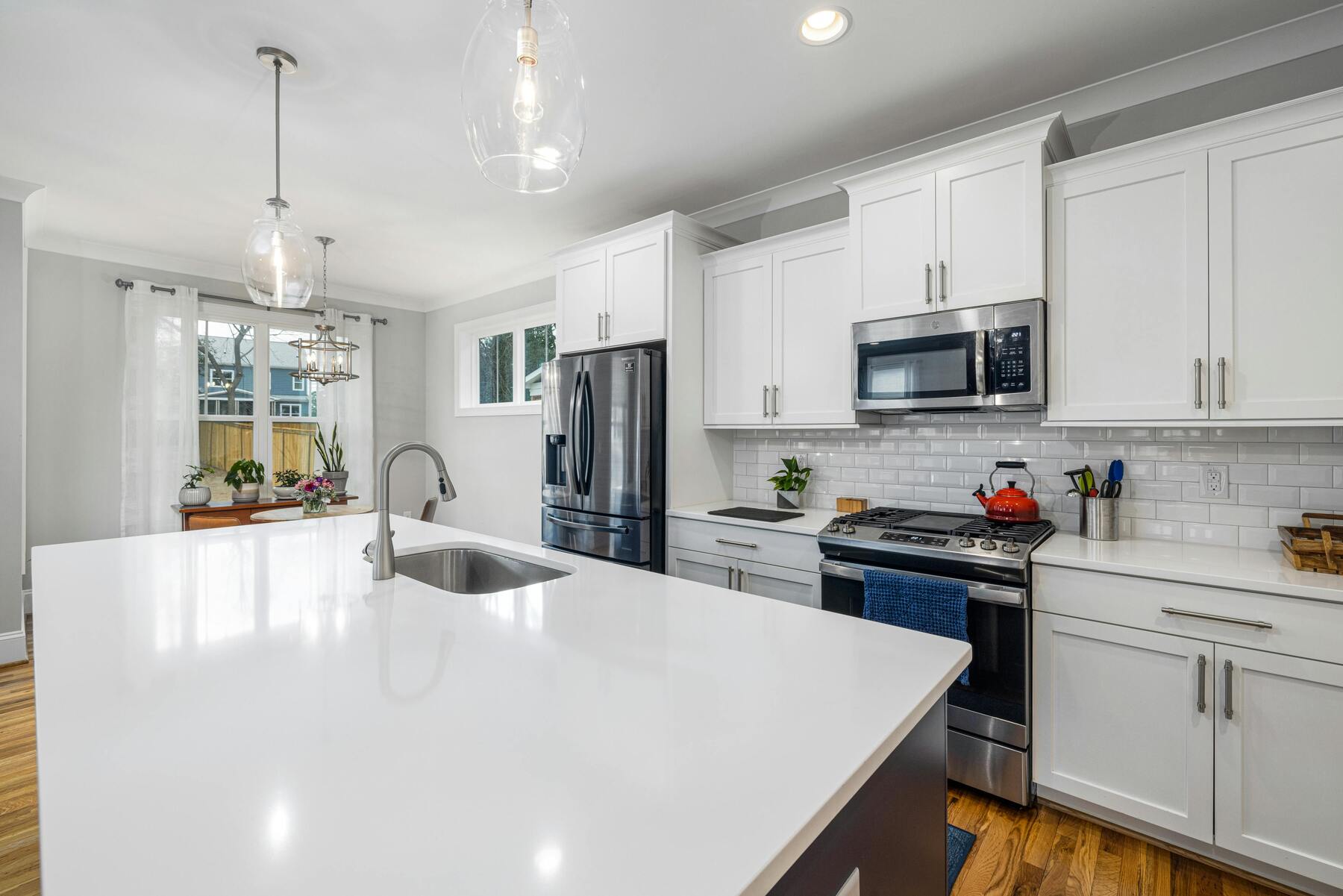
Is quartz heat-resistant and durable enough for daily cooking?
Quartz is durable for everyday use, but it is not the best material for direct high heat. Hot pans should not be placed directly on quartz because the resin in the surface can be damaged by heat.
Granite and quartzite usually handle heat better. Marble can handle moderate heat, but it is softer and more sensitive to acids. Quartz performs very well for stains and daily cleaning, but trivets are still important.
| Material | Heat resistance | Scratch resistance | Stain resistance | Best daily habit |
|---|---|---|---|---|
| Granite | High | High | Good when sealed | Use sealers as recommended |
| Quartz | Moderate | Good | Very good | Use trivets for hot pans |
| Marble | Moderate | Lower | More sensitive | Wipe acidic spills quickly |
| Quartzite | High | High | Good when sealed | Seal as needed |
For homeowners researching marble kitchen countertops Delaware, Ohio, this comparison is important. Marble offers a softer, elegant look, while quartz offers a more predictable surface for daily family use.
What role do cabinets play in a greener countertop project?
Cabinets matter because even the best countertop can fail if the base underneath is weak, uneven, or poorly installed. Strong cabinet construction can extend the life of the countertop and reduce the risk of replacement.
Plywood cabinet boxes are often preferred for strength and stability. Birch can be used in cabinet components and doors for a smooth, durable finish. If cabinets are water-damaged, uneven, or not secured properly, they should be repaired or replaced before countertop installation.
This is not only a construction issue. It is also a sustainability issue. Replacing a countertop early because the cabinets underneath failed is wasteful and expensive.
How does fabrication affect sustainability?
Fabrication affects sustainability because accurate measurements reduce mistakes, remakes, and wasted material. A countertop project becomes more efficient when the template, slab layout, cutouts, seams, and installation plan are handled carefully.
At granite Depot of Columbus, our process includes material selection, measurement, fabrication, and installation planning. We want the surface to fit correctly the first time because every mistake can mean wasted time, wasted stone, extra transportation, and added cost.
A typical countertop process includes:
- Material selection
- Project measurement
- Template confirmation
- Slab layout and fabrication
- Sink and faucet cutouts
- Edge finishing
- Delivery and installation
- Final inspection and care guidance
Standard projects often take about 7 to 14 business days after template, depending on material availability, project size, fabrication complexity, and scheduling. Larger projects, special edges, full-height backsplash, or unusual layouts can take longer.
Can quartz be recycled or reused?
Quartz is difficult to recycle compared with some materials, but remnants and leftover pieces can sometimes be used for smaller projects. Bathroom vanities, laundry counters, shelves, desk tops, and small utility surfaces may be possible depending on the size and shape of the remnant.
This is one reason careful slab planning matters. If a kitchen layout leaves usable material, that material may be useful elsewhere in the home instead of becoming waste.
Homeowners comparing quartz and marble kitchen countertops Delaware, Ohio should ask about remnants if they also need a vanity, small bar, or laundry room counter. Using leftover material can make the project more efficient and more budget-friendly.
What should homeowners ask before choosing eco-friendly quartz?
Homeowners should ask about durability, maintenance, product quality, installation timeline, fabrication process, and whether the color will still feel right long-term. Eco-friendly choices are not only about the label. They are about how the material performs in the home.
Before choosing quartz, ask:
- Is this color timeless enough to keep for many years?
- Is the surface easy to clean without harsh chemicals?
- Does the quote include fabrication and installation?
- Are sink cutouts and faucet holes included?
- Are the cabinets strong enough for new countertops?
- What is the expected timeline after template?
- Can remnants be used for another area?
At granite Depot of Columbus, we believe the best countertop choice is the one that fits the home, budget, and lifestyle without needing unnecessary replacement.
FAQ
Is quartz more eco-friendly than granite?
Quartz can be more eco-friendly in maintenance because it does not need sealing. Granite may appeal to homeowners who prefer natural stone with less manufacturing.
Is quartz a natural material?
Quartz countertops are engineered. They contain natural quartz minerals, but they also include resins and pigments.
Does quartz need sealing?
No. Quartz does not need sealing, which makes it easier to maintain than granite, marble, or quartzite.
How long does quartz countertop installation take?
Many standard projects take about 7 to 14 business days after template. The timeline depends on material availability, layout, cutouts, and fabrication details.
Is marble more eco-friendly than quartz?
Marble is natural, but it can require more maintenance and may stain or etch more easily. The greener choice depends on lifespan, care habits, and project goals.
Can quartz handle hot pans?
Quartz should not have hot pans placed directly on it. Use trivets to protect the resin from heat damage.
What is the starting price for quartz?
Our quartz starts at $55 per square foot. Granite starts at $45, marble at $59, and quartzite at $75 per square foot.
How can we help with your countertop project?
We work from Columbus, OH and help homeowners in nearby areas, including Delaware, Ohio, compare quartz, granite, quartzite, and marble kitchen countertops Delaware, Ohio with practical guidance. granite Depot of Columbus offers material selection, measurement, fabrication, installation, and countertop project planning for kitchens, bathrooms, vanities, laundry rooms, and more. To discuss your project, call (614) 660-5960, visit 845 Harrisburg Pike, Columbus, OH, or go to granitedepotcolumbus.com.