


Natural stone countertops may benefit from sealing, but not every slab needs it, and sealing does not make stone stain-proof. Granite, marble, and quartzite vary in porosity, so the right maintenance plan depends on the specific stone, its finish, and the sealer already applied. Engineered quartz is different: most brands do not require sealing, and applying an unapproved product can leave residue.
At granite Depot of Columbus, we help homeowners compare countertop materials and understand what care each surface needs before choosing a slab. If you are researching granite countertops Mount Vernon, Ohio, it is worth learning how sealing works before deciding which material best fits your kitchen or bathroom.
Do All Natural Stone Countertops Need to Be Sealed?
No. Some natural stones benefit from an impregnating sealer, while others are naturally dense enough that sealing may offer little practical benefit. The stone’s name alone does not determine the answer; individual slabs can differ in porosity and mineral composition.
A penetrating sealer reduces how quickly water and oil-based liquids enter the stone. It does not create an invisible, permanent shield, and it cannot prevent every stain or surface reaction. Sealing is an extra precaution against staining rather than a guarantee that staining cannot happen.
This distinction matters when comparing granite, marble, and quartzite. A dense granite may perform well without frequent sealing, while a more absorbent slab may benefit from protection. Marble may also benefit from sealing, but sealing will not stop acids from etching its surface.
Which Countertop Materials Usually Need Sealing?
Granite, marble, and quartzite may need sealing depending on the specific slab, while engineered quartz generally does not. Always confirm the material and follow the stone supplier’s or manufacturer’s care instructions before applying a product.
| Material | Does it usually need sealing? | Main care consideration |
|---|---|---|
| Granite | Sometimes; depends on porosity | A suitable sealer can reduce absorption of spills |
| Marble | Often benefits from sealing | Sealer may reduce staining, but cannot prevent acid etching |
| Quartzite | Often benefits from sealing, depending on the slab | Confirm the specific stone and its absorption characteristics |
| Engineered quartz | Usually no | Follow the brand’s care instructions; do not apply stone sealer unless approved |
The word “quartz” can cause confusion. Engineered quartz is manufactured from quartz particles and binding materials, while quartzite is a natural stone formed through geological processes. They have different maintenance needs, so we recommend confirming which material you have before buying a sealer.
Homeowners comparing granite countertops Mount Vernon, Ohio should ask whether the chosen slab has already received a factory resin treatment or other processing. That information can affect the fabricator’s recommendations for care and sealing.
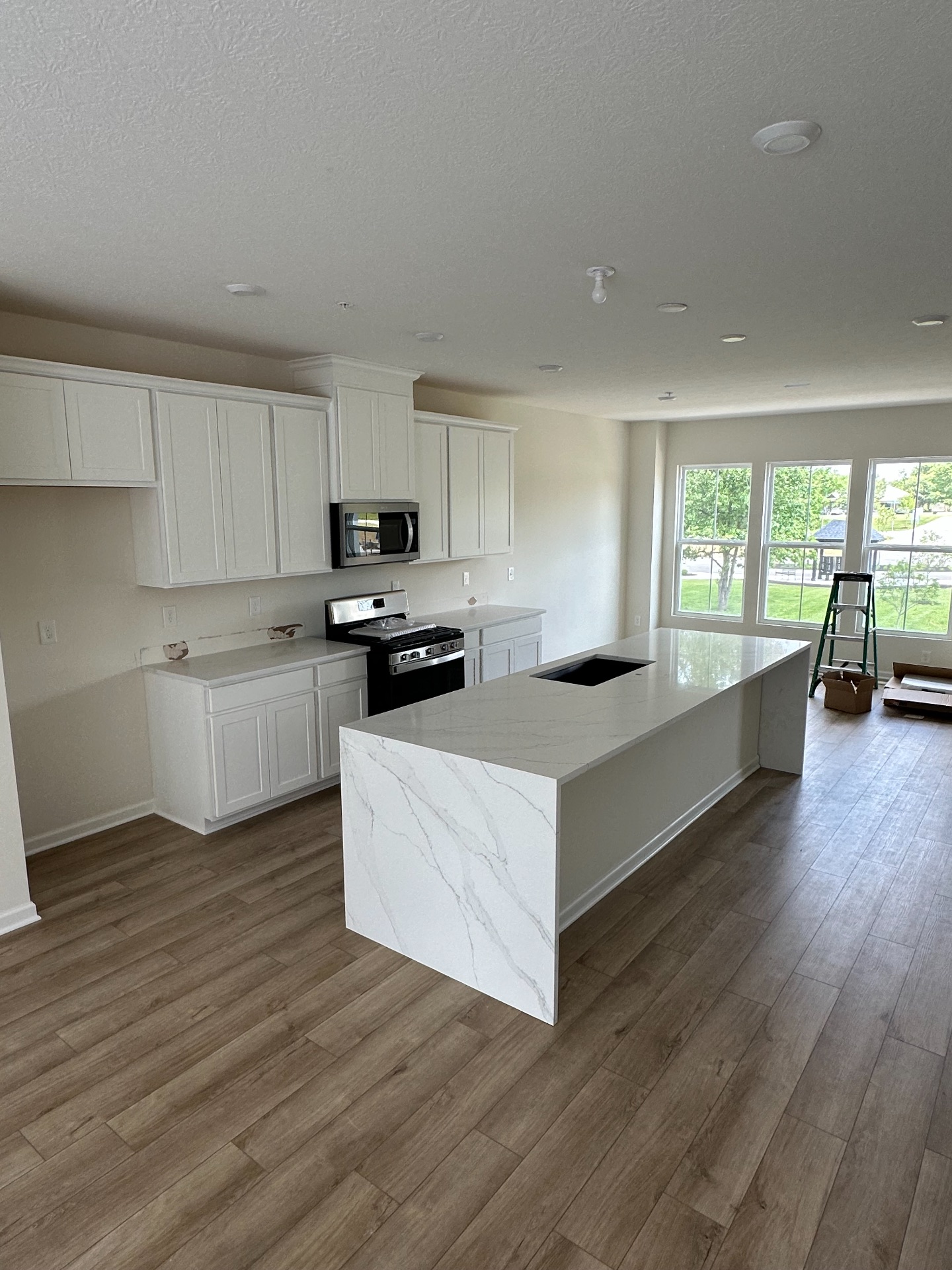
How Can You Tell Whether a Stone Countertop Needs Sealing?
A countertop may need sealing if it absorbs moisture or darkens when exposed to water, but a simple water test is only a rough screening method. Existing sealer, the stone’s finish, and the slab’s natural variation can influence the result.
To make a basic observation, start with a clean, dry surface and place a few drops of water in an inconspicuous area. Follow the stone supplier’s instructions for how long to wait, then check whether the surface darkens or absorbs the water. Do not treat this test as a definitive diagnosis, especially on a countertop with an unknown maintenance history.
If the surface darkens quickly, ask your fabricator or a stone-care professional whether an appropriate impregnating sealer is recommended. If the water remains on the surface, that does not automatically mean the countertop will never need protection. The best decision comes from identifying the material and checking its care requirements.
For granite countertops Mount Vernon, Ohio, we recommend confirming the product used on the slab before applying a new sealer. Using the wrong treatment can leave a film, change the appearance, or complicate later maintenance.
What Is the Difference Between Sealing and Preventing Etching?
Sealing helps reduce liquid absorption, while etching is a chemical change to the stone’s surface. These are different problems and require different prevention methods.
Marble contains calcium carbonate, which reacts with acidic substances such as lemon juice, vinegar, and some cleaners. The reaction can leave a dull spot or change the polish even when the stone has been sealed. Granite and quartzite are generally more resistant to common kitchen acids, but their mineral composition varies, and harsh chemicals can still damage stone.
| Issue | What causes it? | Can sealing prevent it? |
|---|---|---|
| Absorbed stain | Liquid enters the stone and leaves discoloration | A suitable sealer can reduce the risk |
| Marble etching | Acid reacts with minerals in the surface | No |
| Scratches | Abrasion, cutting, or impact | No |
| Heat damage | Sudden or excessive heat exposure | No |
| Residue or dull film | Cleaner buildup or an incompatible product | No |
This is why we advise using cutting boards, wiping up spills promptly, and placing hot cookware on trivets. These habits help protect the surface regardless of whether it has been sealed.
How Often Should Granite, Marble, or Quartzite Be Sealed?
There is no single sealing schedule that works for every stone countertop. The interval depends on the stone’s absorption, the product used, how often the surface is cleaned, and the manufacturer’s guidance.
Some impregnating sealers are designed to provide protection for years, while others may need more frequent attention. Rather than resealing automatically every year, check the specific product instructions and ask your stone supplier what is appropriate for the slab.
If you prepare food on the countertop, choose a product specifically approved for that use and follow its application and curing instructions. Keep the surface clean and dry before applying any treatment, and never layer products without confirming they are compatible.
For homeowners researching granite countertops Mount Vernon, Ohio, we recommend asking about sealing when selecting the slab, not after a stain appears. Knowing the care requirements in advance makes it easier to plan routine maintenance.
What Is the Safest Way to Clean Stone Countertops?
The safest everyday approach is to use a soft cloth, warm water, and a pH-neutral cleaner approved for the specific stone. Strong acids, abrasive powders, and harsh cleaning chemicals can dull or damage certain surfaces.
Neutral cleaners or mild dishwashing detergent are suitable for many natural stone surfaces. Avoid vinegar, lemon-based cleaners, and other acidic products on marble and other acid-sensitive stones. Do not assume a product is safe just because it is labeled for general household use.
A practical daily routine is simple:
- Wipe spills promptly, especially oils, wine, coffee, and acidic liquids.
- Clean with a stone-safe product and a soft cloth.
- Rinse away cleaner residue and dry the surface.
- Use cutting boards and trivets to prevent scratches and heat stress.
- Follow the recommended care instructions for your specific slab.
If a mark remains after normal cleaning, do not immediately apply more sealer. The mark could be a stain, etch, scratch, or cleaner residue, and each issue needs a different solution.
How Much Do Granite, Quartz, Marble, and Quartzite Countertops Cost?
Material selection affects the budget, but the final countertop price also depends on slab size, fabrication, cutouts, edge profiles, delivery, and installation. The following are reference material prices provided for the Columbus service area, not guaranteed installed totals.
| Material | Reference material price per sq. ft. |
|---|---|
| Granite | $45 |
| Engineered quartz | $55 |
| Marble | $59 |
| Quartzite | $75 |
Confirm current prices and what each quote includes before comparing options. For example, two kitchens using the same granite may have different totals if one requires a large island, several sink or cooktop cutouts, complex seams, or a decorative edge.
At granite Depot of Columbus, we recommend comparing the full project estimate rather than looking at material cost alone. A useful quote should clarify fabrication, edge finishing, cutouts, delivery, installation, and any additional work needed to prepare the cabinets.
How Long Does Countertop Fabrication and Installation Take?
A standard countertop project may take around two to three weeks from material selection and templating to installation, although scheduling and material availability can change the timeline. Fabrication often takes several business days to around two weeks after final measurements, depending on the shop’s workload and project complexity.
The process usually includes selecting the slab, confirming measurements, fabricating the pieces, and installing the finished countertop. Custom layouts, special-order slabs, intricate edges, or changes after templating can add time.
Cabinet preparation matters, too. Whether a kitchen uses birch cabinet fronts, plywood cabinet boxes, or another construction style, the cabinets must be properly installed, level, and able to support the countertop. We recommend resolving cabinet adjustments before the final template so the stone can be fabricated to accurate dimensions.
At granite Depot of Columbus, we help customers coordinate material selection, fabrication, and installation planning in Columbus, OH. We also recommend confirming care instructions before installation so you know whether the finished surface needs sealing and which cleaners to use.
What Should You Ask Before Buying a Stone Countertop?
Ask what the slab is made of, whether it has received a factory treatment, whether sealing is recommended, and which products are safe for daily cleaning. These details help you understand the real maintenance requirements rather than relying on general advice for an entire category of stone.
Before placing an order, it is useful to confirm:
- Whether the material is natural granite, marble, quartzite, or engineered quartz.
- Whether the quoted price is for material only or includes fabrication and installation.
- Which edge profile, sink cutouts, and other details are included.
- Whether the stone should be sealed before or after installation.
- Which care products are recommended and how often the surface should be checked.
For anyone comparing granite countertops Mount Vernon, Ohio, we recommend reviewing the material specifications and complete project estimate before making a final decision.
A good countertop should suit both your design preferences and your maintenance routine. A homeowner who wants minimal upkeep may prefer engineered quartz, while someone who values the natural variation of marble or granite may be comfortable following a more specific care plan.
FAQ
Does granite always need to be sealed?
No. Some granite slabs are dense enough that sealing may provide limited benefit, while others benefit from an appropriate impregnating sealer. Follow the recommendations for the specific slab.
Does sealing marble prevent lemon juice etching?
No. Sealing may reduce absorption and staining, but it does not stop acids from reacting with marble. Wipe acidic spills promptly and use stone-safe cleaners.
Does quartzite need to be sealed?
Many quartzite slabs benefit from sealing, but requirements vary. Confirm the material and ask the supplier for recommendations specific to the slab.
Do engineered quartz countertops need sealing?
Usually not. Most engineered quartz products are designed for use without a penetrating stone sealer. Follow the manufacturer’s care instructions.
Can I seal my countertop myself?
Some homeowners can apply a suitable impregnating sealer by following the product directions, but first confirm that the stone needs it and that the product is compatible. Incorrect application can leave residue or an uneven appearance.
How do I know if my countertop sealer has worn off?
A surface that absorbs water or darkens may need further evaluation, but a water test is not conclusive on its own. Ask the stone supplier or a qualified professional to assess the material and existing treatment.
What should I do if a stone countertop develops a dull spot?
Do not assume it needs sealing. The spot could be etching, a scratch, residue, or a stain. Identify the cause first; etching and surface damage may require professional honing or polishing rather than another coat of sealer.
Countertop Selection and Installation in Columbus, Ohio
At granite Depot of Columbus, we help homeowners compare granite, engineered quartz, marble, and quartzite, with guidance on slab selection, fabrication, installation, and everyday care. We serve Columbus, OH, and surrounding communities, including customers searching for granite countertops Mount Vernon, Ohio.
Visit us at 845 Harrisburg Pike, Columbus, OH, or call (614) 660-5960 to discuss material options, reference pricing, and installation timelines. We can help you choose a countertop that fits your home and understand the care it will need over time.
Technical guidance in the article aligns with the Natural Stone Institute’s recommendations that sealing can reduce staining but does not make stone stain-proof, and with manufacturer guidance that engineered quartz generally does not require sealing.