

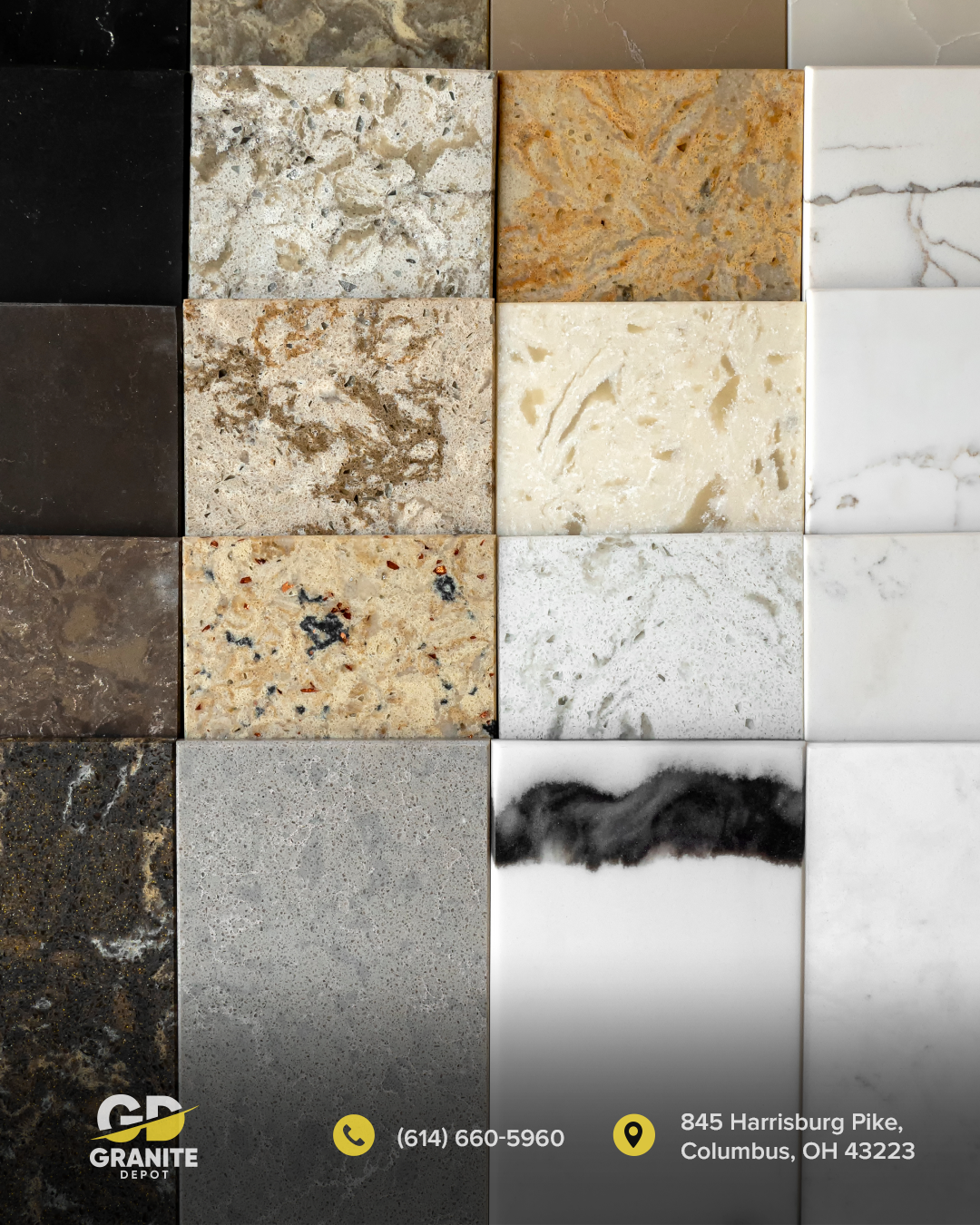
Choosing a countertop gets confusing fast because homeowners hear the same claims repeated everywhere: quartz is indestructible, granite is impossible to maintain, marble should never go in a kitchen, and the most expensive material must be the best one.
Most of those statements are either exaggerated or missing important context.
At Granite Depot of Columbus, we help homeowners separate marketing claims from the practical differences that actually affect daily use. If you are comparing kitchen countertops Lancaster, Ohio, the best material is not the one with the strongest sales pitch. It is the one that matches your cooking habits, maintenance expectations, cabinet structure, budget, and design.
Is quartz really maintenance-free?
Quartz is low-maintenance, but it is not maintenance-free or damage-proof.
Because quartz is engineered from mineral particles, pigments, and resin binders, it does not normally require sealing. That makes it convenient for busy households, especially when homeowners want a predictable surface that is easy to wipe down.
But quartz still has limitations.
Direct exposure to very hot cookware can affect the resin. Strong chemicals can damage the finish. Sharp impacts around edges can still cause chips.
That is why we tell homeowners that “low maintenance” means easier everyday care — not permission to treat the countertop like an indestructible workbench.
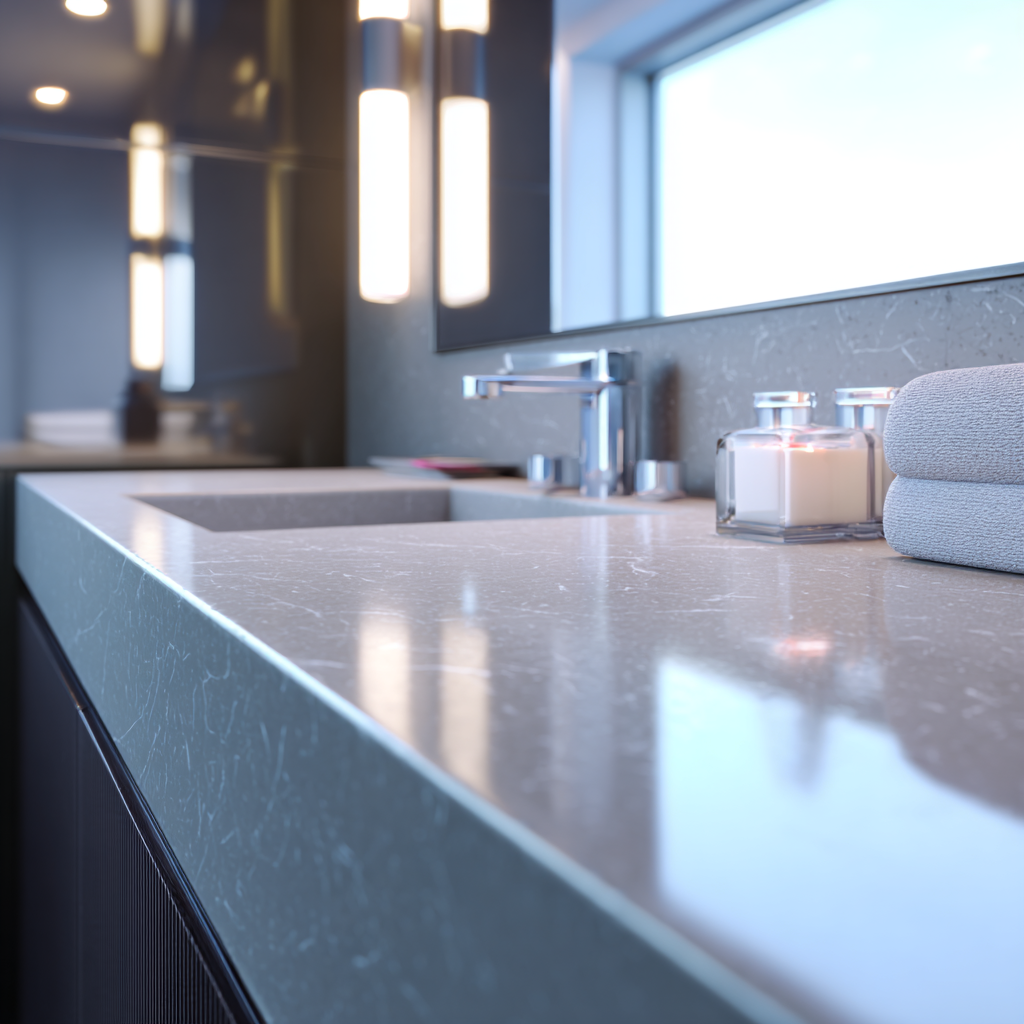
Does granite stain easily?
Properly maintained granite is much less troublesome than its reputation suggests.
Granite is a natural stone, so its porosity varies. Some slabs absorb very little moisture, while others benefit more from periodic sealing. Once properly sealed and maintained, granite can perform extremely well in a busy kitchen.
At Granite Depot of Columbus, we often meet customers who rejected granite before even seeing it because they were told it “stains constantly.” In reality, prompt cleanup and appropriate sealing make a major difference.
For homeowners researching kitchen countertops Lancaster, Ohio, granite remains a practical option when natural character, heat resistance, and durability are important.
Is marble too delicate for a real kitchen?
Marble can absolutely work in a kitchen, but homeowners need realistic expectations.
The biggest issue is not that marble immediately “gets ruined.” It is that marble reacts differently from harder materials. Acidic foods such as lemon juice, vinegar, wine, and tomato products can etch the surface.
Those marks are changes in finish, not necessarily stains.
Some homeowners dislike any visible patina. Others love the way marble develops character over time.
The correct question is not “Can marble be used in a kitchen?”
It is: Are you comfortable with the way marble naturally ages?
If the answer is yes, marble can be a beautiful and completely legitimate kitchen choice.
Is quartzite basically the same thing as quartz?
No. Quartz and quartzite are completely different countertop materials.
Quartzite is natural stone quarried from the earth. Quartz countertops are engineered products containing mineral material combined with resins and pigments.
The distinction matters because their performance and appearance differ.
| Feature | Quartz | Quartzite |
|---|---|---|
| Type | Engineered | Natural stone |
| Pattern | More controlled | Naturally unique |
| Sealing | Usually not needed | Usually recommended |
| Heat resistance | Moderate | High |
| Scratch resistance | High | Very high |
| Maintenance | Low | Moderate |
We regularly explain this distinction because the similar names cause unnecessary confusion.
A homeowner who wants predictable color and minimal sealing may prefer quartz. Someone who wants dramatic natural movement and strong heat resistance may lean toward quartzite.
Does the most expensive countertop automatically perform better?
No. Price and suitability are not the same thing.
A more expensive material may have rarer patterns, more complicated sourcing, or premium aesthetic qualities. That does not automatically make it the best surface for every household.
Our current starting material prices provide a useful comparison:
| Material | Starting Price | Maintenance | Heat Resistance | Stain Resistance |
|---|---|---|---|---|
| Granite | $45/sq. ft. | Moderate | High | Good when sealed |
| Quartz | $55/sq. ft. | Low | Moderate | High |
| Marble | $59/sq. ft. | Higher | Good | Moderate |
| Quartzite | $75/sq. ft. | Moderate | High | Good when sealed |
At Granite Depot of Columbus, we would rather help someone choose a $45-per-square-foot granite that fits their lifestyle than push them toward a $75 quartzite simply because it costs more.
When evaluating kitchen countertops Lancaster, Ohio, budget should be considered alongside maintenance, appearance, cooking habits, and long-term expectations.
Are natural stone countertops impossible to maintain?
No. Most natural stone maintenance is relatively simple when homeowners understand what their material needs.
Granite and quartzite usually benefit from sealing. Marble requires more awareness around acidic foods and cleaners.
None of that means homeowners need complicated daily routines.
Basic care usually comes down to:
- Wiping spills promptly
- Using cleaners appropriate for the material
- Avoiding highly abrasive products
- Using trivets under very hot cookware
- Resealing natural stone when needed
- Avoiding unnecessary impacts at edges
The bigger problem often comes from using the wrong cleaning products rather than from everyday cooking.
Can you put a hot pan on any stone countertop?
No. Even heat-resistant countertops should be protected from direct cookware whenever possible.
Granite and quartzite are naturally resistant to high temperatures, but sudden concentrated heat can still create thermal stress or affect sealers.
Quartz requires more caution because its resin components can react to intense heat.
Marble tolerates heat reasonably well, but protecting the surface is still the smarter habit.
| Material | Hot Pan Directly on Surface? | Better Practice |
|---|---|---|
| Granite | Avoid | Use a trivet |
| Quartz | No | Always use a heat pad |
| Marble | Avoid | Use a trivet |
| Quartzite | Avoid | Use a trivet |
A $15 trivet is easier to replace than a custom fabricated countertop.
Does a countertop need to match the cabinets exactly?
No. Successful kitchens usually coordinate countertops and cabinets rather than matching them perfectly.
A common mistake is trying to make every surface the same shade.
Contrast often produces a stronger design.
Dark cabinets can benefit from a light countertop. White cabinets can handle anything from soft neutral stone to dramatic dark granite. Natural wood cabinets may look better with a countertop that introduces contrast rather than another nearly identical brown tone.
For kitchen countertops Lancaster, Ohio, we recommend looking at countertop material next to actual cabinet samples whenever possible.
Birch cabinets, painted plywood cabinetry, natural wood doors, and laminate finishes can all carry different undertones. A countertop that looks neutral by itself may appear much warmer or cooler next to the cabinetry.
Does cabinet construction matter when installing stone?
Yes. The countertop is only as stable as the structure supporting it.
Natural stone is heavy, and large islands require a level, secure cabinet base. Cabinet boxes made from plywood, birch plywood, engineered panels, or other materials can all work when the construction is appropriate and properly installed.
Problems begin when cabinets are:
- Out of level
- Loose
- Structurally damaged
- Poorly anchored
- Inadequately supported under large overhangs
Before fabrication, the cabinet layout should be finalized.
That matters especially around sinks, cooktops, waterfalls, long spans, and seating areas.

Is countertop fabrication basically just cutting a slab?
No. Good fabrication is much more precise than simply cutting stone to size.
The process includes templating, slab layout, seam planning, cutouts, edge fabrication, polishing, and preparing each piece for installation.
When we fabricate kitchen countertops Lancaster, Ohio, we consider how the veining should flow through the finished project, where seams will be least distracting, and how sink and cooktop openings interact with the stone.
Typical steps include:
- Final cabinet inspection
- Templating and measurements
- Slab layout
- Cutting
- Edge fabrication
- Sink and cooktop cutouts
- Polishing
- Installation
Fabrication usually takes about 7–10 business days after final measurements and approvals.
Installation itself often takes 1–2 days, depending on the size and complexity of the project. The complete countertop process generally takes around 2–3 weeks.
Is choosing a countertop from a tiny sample enough?
Usually not.
A small sample can show basic color, but it cannot show the full movement of natural stone.
Granite, marble, and quartzite can have:
- Large veins
- Color transitions
- Mineral deposits
- Unique markings
- Areas with stronger or softer movement
That is why seeing a full slab can completely change a homeowner’s decision.
Quartz is generally more consistent, but even engineered designs can look different across a full surface than they do on a small sample.
At Granite Depot of Columbus, we encourage customers to look beyond the sample whenever possible, especially when selecting stone for a large island.
Do you need to replace cabinets when replacing countertops?
Not necessarily.
New countertops can often be installed over existing cabinets if the cabinetry is structurally sound, level, and compatible with the new surface.
Replacing countertops without replacing cabinets can make sense when:
- The cabinet boxes are in good condition
- The layout still works
- The homeowner likes the cabinet style
- The new surface does not create structural issues
However, countertop replacement is also a good time to identify cabinet problems.
If the cabinets are failing, badly out of level, or no longer fit the desired layout, installing expensive stone over them may not be the best long-term decision.
What actually matters when choosing a countertop?
The right countertop should fit your real lifestyle rather than an internet ranking.
Before selecting a material, we suggest considering five questions:
- How often do you cook?
- How much maintenance are you willing to do?
- Do you prefer natural variation or consistent patterns?
- Is heat resistance important?
- What materials already exist in the kitchen?
A family that cooks every night may prioritize granite or quartzite. Someone who wants minimum maintenance may choose quartz. A homeowner who loves natural patina may happily choose marble.
There is no single “best” countertop because different materials solve different problems.
FAQ: Common Countertop Myths
Is granite outdated?
No. Granite remains popular because it offers natural patterns, durability, and strong heat resistance.
Does quartz need sealing?
No. Engineered quartz normally does not require sealing.
Does quartzite need sealing?
Usually yes. Quartzite is natural stone and can benefit from periodic sealing.
Can marble work in a busy kitchen?
Yes, but homeowners should expect more maintenance and possible etching.
Are light countertops harder to maintain?
Not necessarily. Maintenance depends more on the material than on the color.
Can countertops be installed over old cabinets?
Yes, when the existing cabinets are structurally sound, properly secured, and level.
How long does countertop fabrication take?
Fabrication typically takes around 7–10 business days, with installation requiring approximately 1–2 days depending on project complexity.
Where Can Lancaster, Ohio Homeowners Get Straight Answers About Countertops?
The biggest countertop mistake is not choosing granite instead of quartz or marble instead of quartzite. It is choosing a surface based on myths rather than understanding how the material will actually perform in your home.
Granite Depot of Columbus serves Columbus, OH, Lancaster, Ohio, and surrounding Central Ohio communities with material selection, templating, custom fabrication, and professional installation. Homeowners exploring kitchen countertops Lancaster, Ohio can compare granite, quartz, marble, and quartzite and get practical guidance based on their project rather than a one-size-fits-all recommendation.
Visit us at 845 Harrisburg Pike, Columbus, OH, or call (614) 660-5960 to discuss your countertop project.