


When homeowners decide to transform their kitchens or bathrooms with natural stone countertops, the excitement of choosing a stunning slab often overshadows the practical side of the journey—the installation process itself. Yet, understanding this process is just as important as picking the right stone. Knowing what happens from the first consultation to the final polish helps eliminate surprises and gives homeowners confidence every step of the way.
The countertop installation process is a structured, well-organized sequence designed to ensure accuracy, quality, and beauty. By exploring each stage in detail, we can highlight why choosing a professional fabricator and installer like Granite Depot of Columbus makes such a difference in the outcome.
Initial Consultation and Estimate
The journey begins with a conversation. Most homeowners reach out to a fabricator after being inspired by the idea of upgrading their space with granite, marble, quartz, or quartzite. At this stage, the company gathers basic information about the project: kitchen or bathroom layout, square footage, preferred stone type, and budget expectations.
Once these details are clear, a preliminary estimate is prepared. This gives the homeowner a realistic sense of cost before committing to a material or design. Many companies, including Granite Depot of Columbus, are known for providing quick and accurate quotes—often within 24 hours. This speed helps homeowners move forward without delays and ensures their plans remain on schedule.
Stone Selection and Design Consultation
Choosing the right stone is often the most exciting step of the process. Showrooms typically offer an impressive range of slabs, from timeless granite and elegant marble to durable quartz and exotic quartzite. Each type of stone has its own benefits:
- Granite for its natural durability and one-of-a-kind patterns.
- Marble for timeless luxury and elegance.
- Quartz for uniform appearance and low maintenance.
- Quartzite for the perfect balance of strength and beauty.
During the consultation, designers help clients match the stone with their lifestyle and interior style. They might discuss edge profiles, backsplash pairings, and finish options such as polished, honed, or leathered. This stage ensures the countertop is not just a surface, but a custom design element that elevates the entire space.
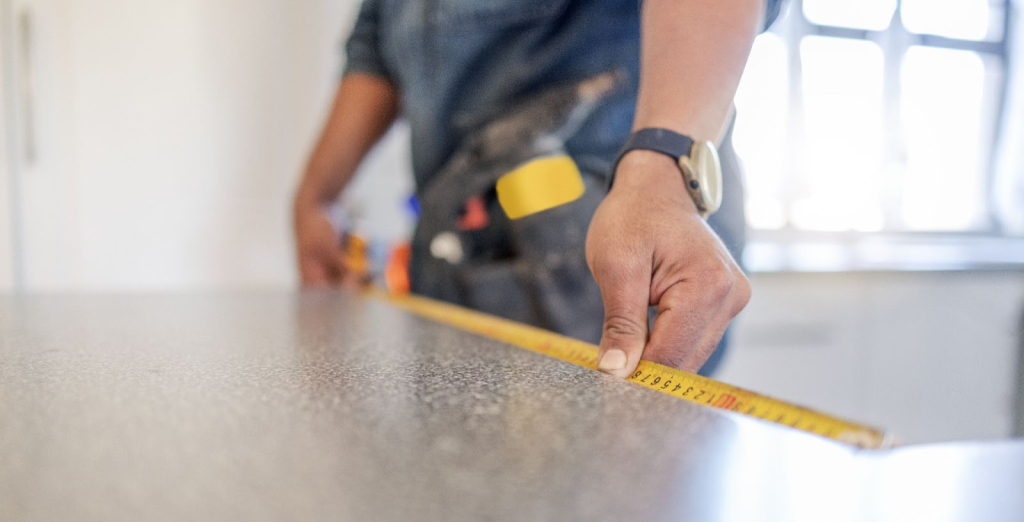
In-Home Measurements (Templating)
After a stone is chosen, professionals schedule an in-home appointment to create a precise template. This step is essential because even small variations in wall angles, cabinetry, or appliances can affect how the countertop fits.
Today, most fabricators use digital templating systems. With specialized equipment, installers map out the exact dimensions of the space. These measurements are then transferred to a CAD (computer-aided design) system, which allows the fabrication team to plan every cut, seam, and curve with accuracy.
For homeowners, this stage offers peace of mind. They know the finished countertop will not only fit perfectly but also maximize the beauty of the selected slab by showcasing its best patterns and veins.
Fabrication of the Countertop
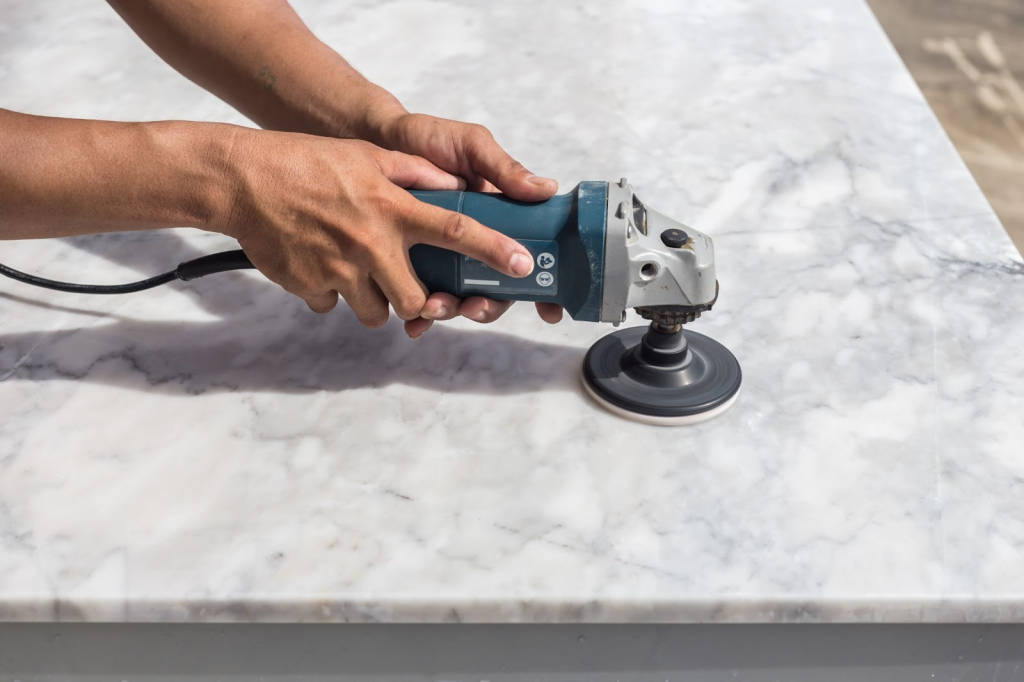
Once the template is finalized, the real artistry begins. The chosen slab of stone is delivered to the fabrication shop, where skilled craftsmen cut it to match the exact specifications. This process involves heavy machinery as well as hands-on precision to ensure smooth edges and flawless surfaces.
During fabrication, the stone is:
- Cut into shape with diamond-tipped saws.
- Polished to enhance shine and depth.
- Shaped along the edges with the chosen profile (beveled, bullnose, ogee, etc.).
- Finished with any additional detailing requested by the client.
This is also when sink and cooktop cutouts are made. The accuracy of fabrication determines how seamless the installation will look in the final stage.
Delivery and Installation
With the countertop fabricated, the team schedules the installation day. Homeowners are usually advised to clear the area—removing items from cabinets, sinks, or vanities—so the crew can work efficiently.
The installation itself involves several careful steps:
- Removal of old countertops, if necessary.
- Placement of the new stone, which can weigh hundreds of pounds and requires skilled handling.
- Seaming and joining pieces together, often with epoxy tinted to match the stone.
- Securing the countertop to cabinetry using brackets or adhesives.
- Caulking and sealing around sinks, backsplashes, or walls to ensure a watertight finish.
Homeowners typically notice an immediate transformation. A dull or outdated kitchen suddenly feels modern, luxurious, and inviting. In bathrooms, a new vanity top instantly adds elegance and functionality.
Sealing and Protection
Most natural stones, especially granite and marble, benefit from sealing. This invisible protective layer helps prevent stains, bacteria growth, and moisture damage. During installation, professionals apply a high-quality sealer to ensure the surface is ready for years of use.
For quartz, which is non-porous, sealing is not necessary. Still, installers carefully check for a flawless finish before completing the job.
Final Inspection and Client Walkthrough
The last step is the final walkthrough. Installers invite the homeowner to inspect the countertops, seams, edges, and polish. This is the opportunity to ask questions about care and maintenance, such as how often to reseal granite or which cleaners to avoid.
Companies like Granite Depot of Columbus often provide detailed care instructions, giving clients the knowledge to keep their countertops beautiful for decades. Homeowners leave this stage not only with a completed project but also with the confidence to maintain it properly.
Why the Process Matters
Some homeowners underestimate the complexity of countertop installation. They may think of it as simply placing a slab on cabinets, but in reality, it’s a combination of design, precision engineering, and craftsmanship. Each stage—from consultation to sealing—is essential to achieving the flawless result people expect.
Understanding this process also highlights why professional installation is worth the investment. Attempting shortcuts can lead to uneven seams, cracked stone, or poor fit, all of which compromise both beauty and durability.
The Transformation
When the process is complete, homeowners experience more than a physical change in their space. A new stone countertop redefines the heart of the home. Kitchens become a gathering point for family and friends. Bathrooms feel more like spa retreats. And the value of the property increases, making the project not just a design upgrade but a smart financial decision as well.
For many, the most rewarding moment is seeing the contrast between the “before” and “after.” What begins as a consultation ends with a polished, functional, and luxurious surface that brings pride and joy every day.